

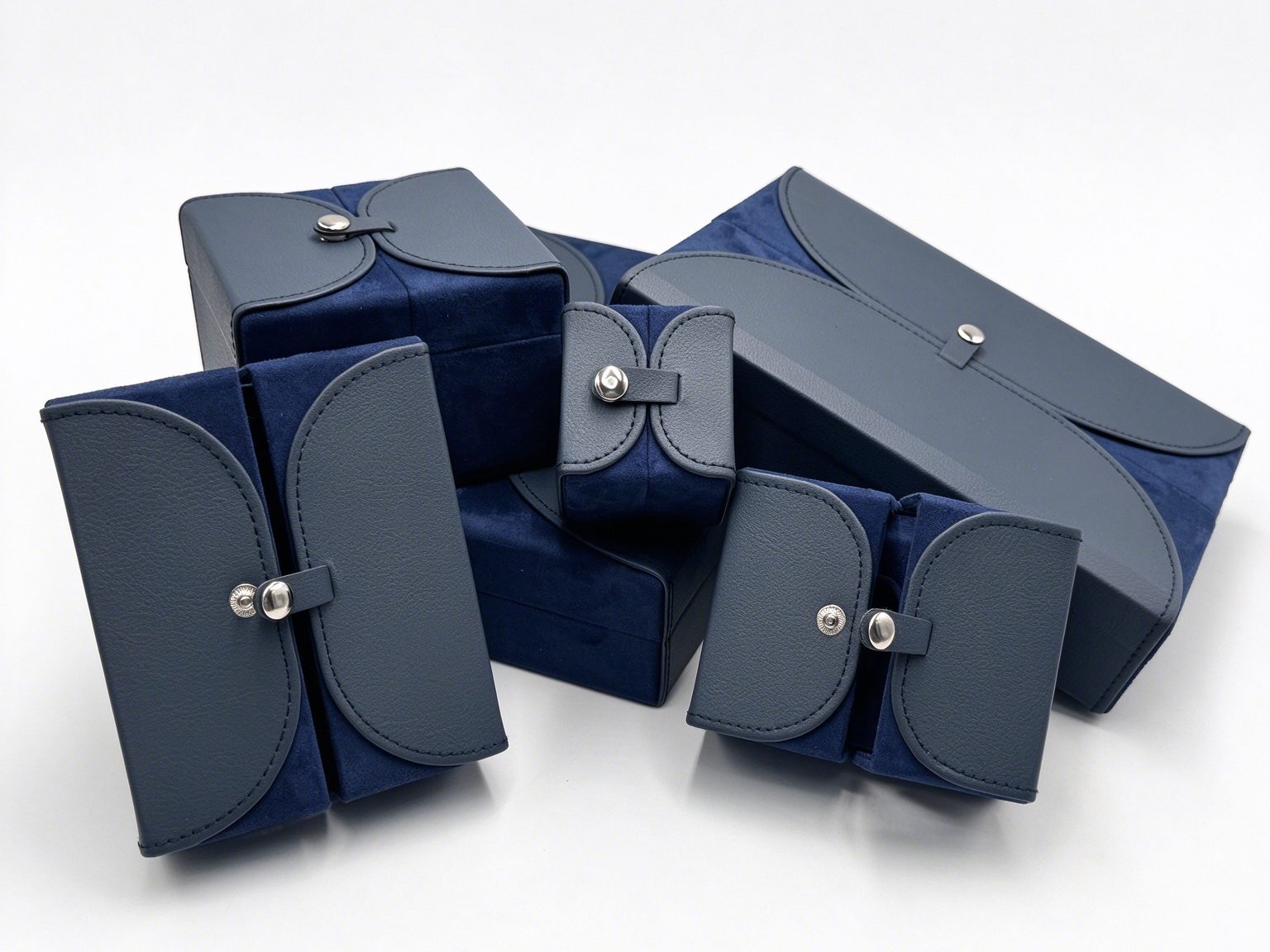
Jewelry box bulk shipments often face critical quality failures after weeks in sea containers—ranging from harsh chemical odors to corner peeling and inner lining bubbling. For B2B buyers engaged in jewelry box B2B procurement, sourcing custom jewelry boxes, or placing bulk jewelry box orders, an impressive sample does not guarantee flawless mass production. At YUNFAI, we manage these production hazards directly on the factory floor by strictly enforcing jewelry box quality control standards throughout every step of manufacturing.
1. Jewelry Box Odor Control: Adhesive Selection & VOC Thresholds
Leather jewelry boxes, velvet jewelry boxes, and microfiber jewelry boxes require extensive gluing during production. To reduce costs or shorten drying times, some suppliers use high-volatility solvent adhesives rich in benzene and VOCs. When thousands of customized jewelry packaging boxes are sealed in container cartons under ocean transit temperatures, trapped gases contaminate the linings, causing a strong chemical stench.
Water-Based Eco Glue vs. Standard Solvent Glue for Jewelry Boxes
| Inspection Metric | Standard Solvent / Contact Cement | Water-Based Eco Glue for Jewelry Boxes |
|---|---|---|
| Compliance & Odor | Harsh odor, high VOCs, customs hold risk | Non-toxic, odorless, RoHS 2.0 & REACH compliant |
| Thermal Stability | -5°C to 40°C (prone to embrittlement/softening) | -20°C to 60°C (resists maritime temp swings) |
| Bond Durability | Degrades under long-term humidity | Forms a waterproof polymer network after curing |
How Factories Test Jewelry Box Odors
Prior to packing, a compliant jewelry box manufacturer places random samples in a 60°C constant temperature and humidity chamber for 48 hours. Shipments are approved only if zero pungent odors spill out and no adhesive degradation occurs.
2. Jewelry Box Corner Integrity: CNC V-Grooving & Edge Wrapping
During transit and handling, the four corners of a luxury jewelry box are susceptible to peeling or snapping. These defects trace directly back to greyboard grooving depths and edge-wrapping tension.
Precision Greyboard V-Grooving (±0.05mm)
The inner structural shells of premium paper jewelry boxes and leatherette boxes rely on high-density greyboard. CNC grooving cutter depths must stay within ±0.05mm:
- Shallow Grooves: Angles fold unevenly, causing corner bulges that prevent outer wraps from adhering flush;
- Deep Grooves: Cuts penetrate the bottom liner paper, causing jewelry box corners to snap upon impact.
Edge Wrapping Tension & Glue Application
When manual operators wrap corners on a velvet jewelry box or a leather jewelry box, pulling tension must remain consistent (8 to 10N). Glue film thickness along edges must strictly measure 0.15 to 0.2mm—too little causes delamination, while too much overflows and stains the fabric.
3. Jewelry Box Interior Lining Bubbling: Dwell Time & Peel Strength
A microfiber jewelry box or velvet box is widely used for displaying high-end fine jewelry. However, uneven adhesive coating or insufficient pressing time can cause jewelry box interiors to bubble and lift when humidity fluctuates.
Automated Glue Spraying & Dwell Time
- Automated Spraying: Large-area lining lamination requires automated glue sprayers to keep adhesive distribution variances within 5%, preventing dry spots or pooled glue;
- Cold-Press Dwell Time: After material placement, panels must remain under 0.4MPa pressure for 10–15 seconds, forcing adhesive deep into backing fibers to build a mechanical lock.
Peel Strength Testing
QC inspectors utilize digital force gauges to perform 90-degree peel tests on jewelry box interiors. Under standard jewelry box factory QC protocols, a passing result must produce “substrate failure” (tearing the paperboard base or fabric fibers) rather than clean adhesive peeling.
4. Pre-Shipment Protocols: AQL 2.5 & Sea Transit Testing for Jewelry Boxes
Following ISO 2859-1 (AQL 2.5) sampling protocols, bulk jewelry box orders must pass three mandatory physical tests before leaving the factory:
- Thermal Shock Testing
- Samples are frozen at -20°C for 12 hours, then transferred to 60°C for 12 hours across 3 full cycles. Inspection verifies no material cracking, curling, or shrinking.
- 3M Tape & Abrasion Testing
- 3M 600 tape is applied firmly to hot-stamped jewelry box logos and pulled off rapidly to confirm foil adhesion; microfiber linings undergo 5,000 abrasion cycles to verify zero pilling.
- Transit Drop Testing
- Fully packed jewelry gift boxes undergo a 1.2-meter drop test (1 corner, 3 edges, 6 faces) to guarantee structural integrity and hinge stability.
Jewelry Box Sourcing FAQ
Q1: Can airing out shipment cartons resolve chemical odors in custom jewelry boxes?
Answer: Rarely. Odors from cheap solvent adhesives stem from VOCs that off-gas over several months. Airing out cartons for a few days will not eliminate deep-seated chemical fumes. When placing a jewelry box wholesale order, always mandate water-based eco glue and request odor testing compliance up front.
Q2: How do we enforce non-delamination and color accuracy in a B2B jewelry box contract?
Answer: Quantify key specifications directly within your purchase agreement:
- Adhesives must comply with REACH or RoHS 2.0 standards;
- Peel testing must achieve substrate failure;
- Color variance against the Signed Golden Sample must not exceed ΔE ≤ 1.5 under standard D65 lighting.
Q3: Is velvet or microfiber better at preventing bubbling in custom jewelry packaging?
Answer: Microfiber generally offers better anti-bubbling stability. Its backing is flat and densely woven, allowing even adhesive absorption. Velvet backing is more prone to uneven glue penetration if pressure or adhesive thickness varies. If velvet is required, select high-density velvet with a pre-laminated backing cloth.
Across YUNFAI’s production lines, every custom jewelry box order follows exact data-driven metrics from shell cutting to final casing. When choosing a reliable jewelry box manufacturer, focusing on the physical and chemical compliance of raw materials delivers far more value to your brand than judging an initial prototype alone.