

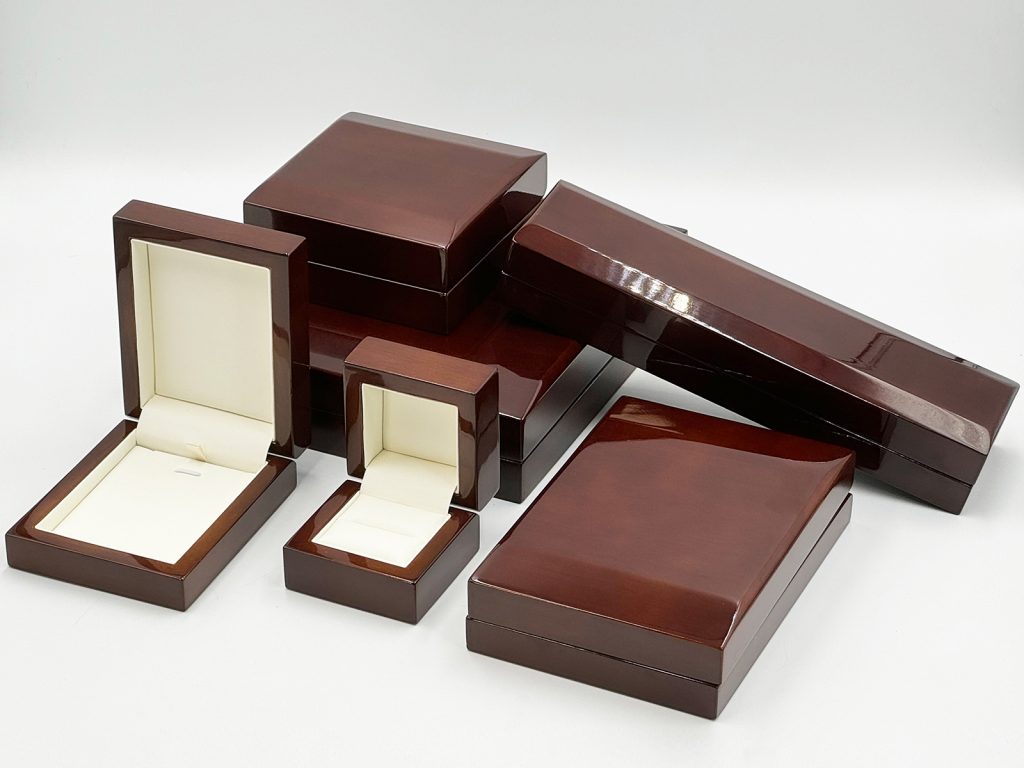
or luxury jewelry packaging and high-end gift boxes, piano lacquer wooden boxes are a staple choice for elevating brand perception. But many procurement teams run into the same costly pitfall: two products both labeled “high-gloss piano finish” can differ 3–5x in price. Samples may look shiny online, but bulk orders often arrive with hazy gloss, obvious orange peel texture, chipped edges, and uneven gaps — dragging down your brand’s perceived value instead of elevating it.
True luxury-grade piano lacquer is never just “one coat of shiny paint.” From substrate stability and coating layers to mirror polishing details, every step adds up to the final finish. This guide breaks down the key differences and helps you avoid common sourcing mistakes.
1. Quick Comparison: Low-End Lacquer Boxes vs. Luxury-Grade Piano Lacquer Boxes
You can usually tell quality apart by eye and touch, no lab tests needed. Here’s how they stack up across core sourcing criteria:
| Comparison Dimension | Low-Cost “Plastic-Feel” Lacquer Box | Luxury-Grade Piano Lacquer Box (YUNFAI Standard) |
|---|---|---|
| Substrate Material | Low-density fiberboard, prone to moisture warping, poor surface flatness | High-density MDF or premium hardwood (mahogany / walnut), moisture content strictly controlled at 8–12% |
| Coating Layers & Process | 1–2 quick spray coats, thin film that often shows substrate, no fine sanding | Minimum 6–8 cycles of spray, cure, and hand sanding; premium PU paint; thick, full-bodied film |
| Surface Defect Control | Obvious orange peel texture, grain, pinholes; distorted, blurry reflection | Mirror-level flatness, zero particles or bubbles; sharp, clear reflection with no orange peel |
| Hardware & Joints | Flimsy light-weight hinges, loose operation, uneven gaps | Heavy-duty metal hinges / concealed hinges; precision corner mitering; joints under 0.5mm with smooth positioning |
| Edge & Corner Finish | White edges, exposed substrate, thin paint chips easily | Smooth chamfered edges, even coating all around; scratch and impact resistant |
2. The 4 Core Reasons True Piano Lacquer Costs More
Why can’t low-cost factories just produce a better mirror finish? It’s not for lack of trying — the technical barriers and labor costs are simply too high to cut corners and achieve premium results.
2.1 Substrate Preparation: Tiny Imperfections Get Magnified by Paint
A glossy finish acts like a magnifying glass. Even 0.1mm dents, grain, or pores on the base material become highly visible once coated with lacquer. Cheaper boxes use low-density fiberboard that warps easily with moisture and has a rough surface. Little to no wood filler or pre-sanding is done, so flaws show straight through the paint. High-quality piano lacquer boxes go through multiple rounds of filler application and sanding, bringing surface tolerance below 0.05mm before any paint is applied. Wood moisture content is strictly controlled at 8–12% to prevent warping and cracking with temperature and humidity changes.
2.2 The “Spray-Dry-Sand” Cycle: Labor Adds Up Fast
“Piano lacquer” is not a special type of paint — it’s a repeating process of priming, building color, and polishing, defined by multiple spray-and-sand cycles. Low-end boxes get only 1–2 quick topcoats. The film is so thin you can often see the substrate through it, which gives that flat, cheap plastic look. True high-gloss finish requires at least 6–8 passes: 2–3 primer coats to seal wood pores, each cured in a temperature-controlled room and hand-sanded; 3–4 color and clear topcoats, sanded with progressively finer grit between each layer; and a final mirror polishing step. Each extra round adds labor, material, and production time — which is why low-cost manufacturers skip layers: they can’t compete on price if they build up the film properly.
2.3 Dust-Free Booths & Mirror Polishing: Dust Ruins High Gloss
Airborne dust particles are the biggest enemy of a perfect high-gloss finish. In an open workshop, dust lands on wet paint and dries into tiny bumps that can never be polished out completely. Luxury-grade piano lacquer must be applied in controlled dust-free spray booths with strict particle count limits. The final step uses specialty polishing compounds, with machine buffing followed by hand finishing, to achieve a true mirror-like reflection with zero orange peel texture — light reflections appear straight and sharp, not wavy or distorted.
2.4 Interior Lining & Odor Control: The Hidden Quality Mark
Two invisible issues separate premium boxes from cheap ones: off-gassing and lining compatibility, both of which directly impact the end customer experience. Low-cost lacquer boxes often have a strong chemical smell when unpacked. Beyond poor unboxing experience, volatile fumes can tarnish metal jewelry and watch components. Quality piano lacquer boxes allow full curing and off-gassing before assembly, then are lined with soft microfiber or leatherette to protect contents and avoid odor transfer.
3. YUNFAI Piano Lacquer Wooden Boxes: Luxury Quality at Scale
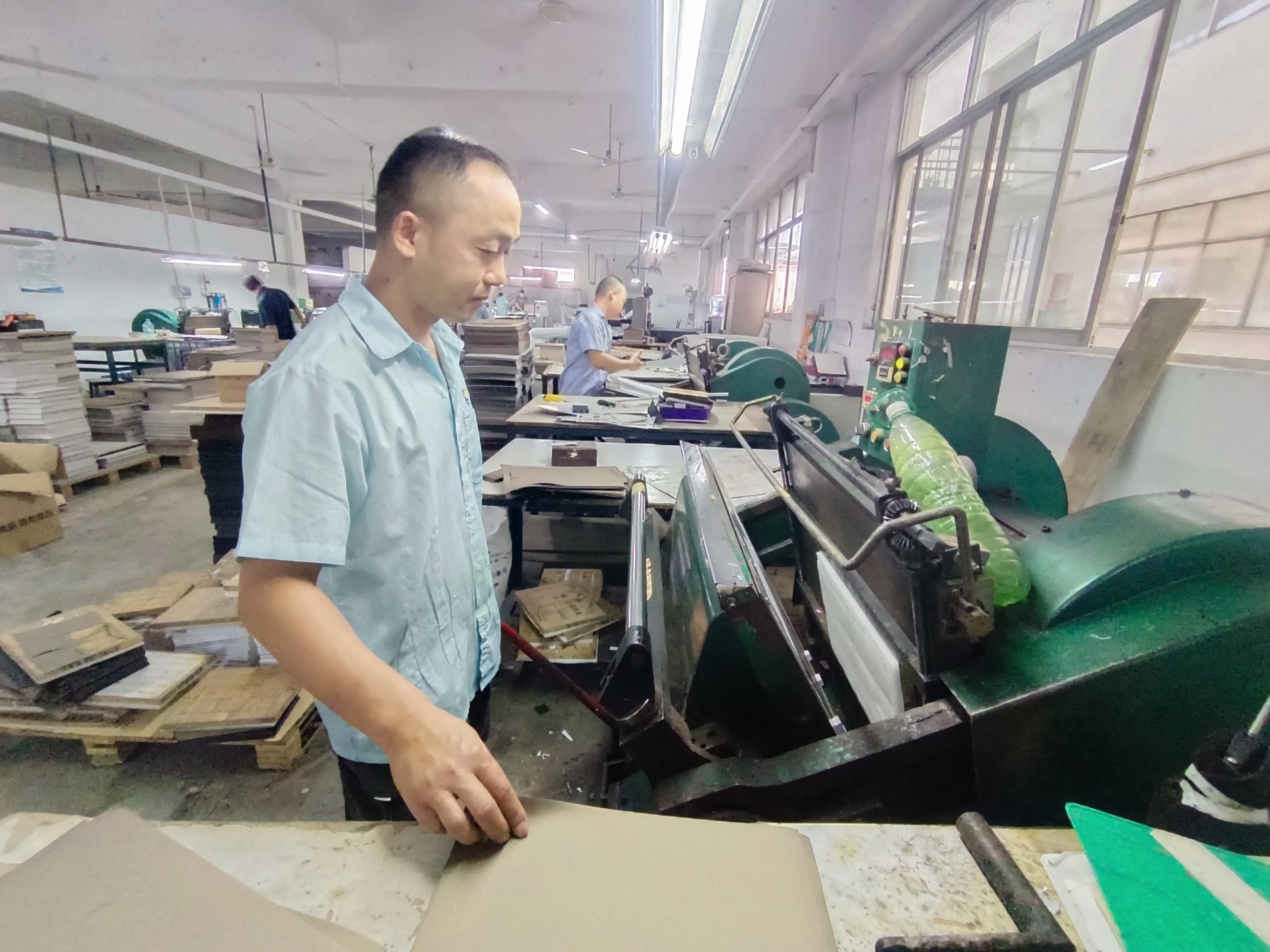
For jewelry, watch, and premium gift brands, great packaging needs three things: premium finish, consistent quality, and manageable costs. With 30 years of experience as a direct manufacturer, YUNFAI Wooden Box Production has standardized luxury piano lacquer craftsmanship for reliable bulk orders.
- Own 20,000+ sqm production facility with full in-house woodworking, painting, polishing, and assembly lines, with QC checkpoints at every stage to ensure sample-matching quality across full runs.
- 1,000+ ready-made molds available in classic finishes including mahogany, high-gloss black, and high-gloss navy — cutting tooling costs and lead times dramatically.
- Fully customizable dimensions, logo branding, and interior inserts, ideal for luxury jewelry packaging, high-end corporate gifts, watch presentation cases, and more.
4. FAQ for Piano Lacquer Wood Box Sourcing
Q1: How can I quickly tell real piano lacquer apart from regular shiny paint?
A: Three quick, practical checks:
- Check the reflection: True piano lacquer produces sharp, undistorted reflections. Hold it under a light — if the line of the bulb looks wavy or bumpy, that’s orange peel texture from a cheap finish.
- Feel the surface: Quality piano lacquer has a thick, deep, glass-like feel, not the thin, plasticky shine of a single topcoat. Premium PU paint is also much more resistant to light scratches.
- Inspect the details: Look at corners and joints. Real piano lacquer has even coating all around edges, no white spots or exposed substrate. Boxes built with corner mitering have uniform, tight gaps, typically under 0.5mm.
Q2: High-gloss boxes scratch easily in shipping. How do you ensure bulk delivery in perfect condition?
A: Scuffing is a common concern with high-gloss packaging. At YUNFAI, every box gets three layers of protection before shipping: an anti-static protective film directly on the lacquer surface, a heavy-weight flannel dust bag, and a thick reinforced outer carton for shock and scratch resistance. We also offer retail-ready custom packaging options for direct-to-consumer fulfillment.
The quality of a piano lacquer wooden box is about much more than just “looking shiny.” It’s the result of controlled materials, layered craftsmanship, clean production, and attention to hidden details — and it’s one of the most visible signals of your brand’s quality. If you’re looking for a reliable piano lacquer wood box manufacturer for your luxury packaging project, reach out to YUNFAI Wooden Box Production. We’ll match you with the right finish and construction for your brand and budget.