
As we enter 2026, the global jewelry market is undergoing a profound transformation. Shifting consumer demographics (led by Gen Z and early Gen Alpha), stringent international environmental regulations, and rapidly changing D2C e-commerce dynamics have redefined the role of packaging.
For jewelry brand founders, packaging designers, and B2B procurement leaders, a jewelry box is no longer just a protective container—it is a brand’s physical ambassador, a key driver of customer retention, and an essential component of ESG compliance.
In this comprehensive trend report, YUNFAI analyzes the 5 dominant global packaging trends for 2026–2027 and shares actionable insights to help you optimize your supply chain and stay ahead of the curve.
Trend 1: Circular & Zero-Plastic Luxury (Beyond Basic “Recycling”)
Sustainability has evolved from a marketing buzzword into an absolute procurement requirement, particularly in North American and European markets facing strict packaging waste directives. In 2026–2027, “recyclable paper” is the baseline; the true focus is Circular Luxury.
Key Developments:
- Plastic-Free Interiors: Brands are aggressively phasing out conventional EVA foam and synthetic sponges, replacing them with molded sugarcane pulp, FSC-certified paper accordion structures, and ocean-bound biodegradable bio-foams.
- Mono-Material Engineering: Crafting entire box assemblies—including hinges, latches, and inserts—from a single recyclable material family to simplify consumer recycling.
- Water-Based & Organic Inks: Widespread adoption of soy-based inks, water-based varnishes, and non-toxic adhesives that leave zero harmful chemical residues.
B2B Procurement Tip: Verify your manufacturer’s FSC (Forest Stewardship Council) and GRS (Global Recycled Standard) supply chain certifications early to ensure seamless compliance across export markets.
Trend 2: Tactile Minimalism & Sensory “Quiet Luxury”
The era of overly glossy, heavily lacquered, and loud logo-covered boxes is fading. Driven by the global rise of “Quiet Luxury,” 2026–2027 packaging emphasizes subtle sophistication, tactile richness, and sensory engagement.
Key Developments:
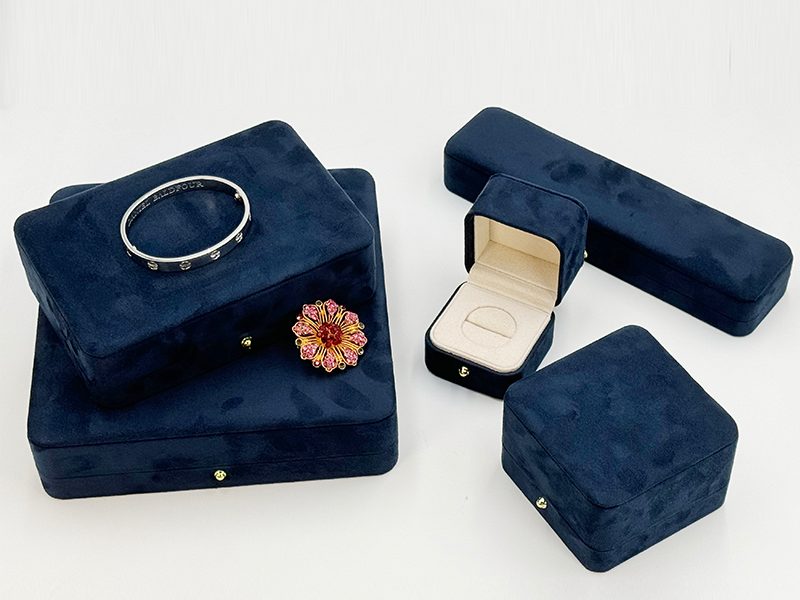
- Earth-Inspired Organic Textures: High-end brands are embracing organic matte finishes, subtle linen embossing, sand-grained specialty papers, and soft-touch velvet-surfaced microfibers.
- Warm, Grounded Color Palettes: Muted, nature-inspired tones dominate—such as terracotta, sage green, warm taupe, raw beige, and deep mineral navy—evoking calm and timelessness.
- Seamless Structural Engineering: Invisible magnetic closures, soft-damped opening mechanisms, and flush hidden hinges that create a smooth, silent, and satisfying unboxing motion.
Trend 3: Reusable Packaging & “Second-Life” Design
In 2026 and 2027, consumers actively penalize single-use packaging. The most successful jewelry brands are designing boxes that are intentionally meant to be kept, displayed, or carried long after the initial purchase.
Key Developments:
- The Box as a Vanity Organizer: Rigid jewelry boxes designed with removable internal trays, stackable compartments, or built-in mirrors, converting the packaging into a permanent bedroom dresser piece.
- 2-in-1 Travel Solutions: Outlining rigid outer shells with detachable ultra-soft microfiber jewelry pouches or portable zip cases that customers take on trips.
- Multi-Functional Gift Packaging: Packaging that transforms into a keepsake display box or framed showcase for commemorative heirlooms.
Why It Matters: When your packaging lives permanently on a customer’s vanity table, your brand receives daily organic visual exposure at zero extra ad cost.
Trend 4: Modular Interiors & Agile OEM/ODM Customization
With jewelry brands expanding their product lines into multi-category offerings (rings, layered necklaces, charm bracelets, luxury watches), rigid single-purpose boxes lead to excess inventory costs. Modular packaging architecture is the key solution for 2026–2027.
Key Developments:
- Universal Convertible Inserts: Multi-slot internal pads engineered with adaptive cutouts that secure rings, stud earrings, and fine chain necklaces within a single standardized outer box dimension.
- Agile Customization for Low-MOQ Runs: Advanced digital foil stamping and precision laser engraving enable brands to run seasonal collections or personalized influencer collaborations without paying massive die-cut tooling fees.
- Standardized Outer Shells + Tailored Linings: Brands streamline shipping logistics by standardizing 3 to 4 outer box sizes while customizing low-cost inner trays per product launch.
Trend 5: “Phygital” Connected Packaging & Smart Verification
As counterfeit jewelry increases online and D2C brands seek deeper customer connections, smart packaging is bridging the physical unboxing experience with the digital brand ecosystem.
Key Developments:
- Embedded NFC & QR Authenticity: Concealed NFC chips or aesthetic micro-QR codes embedded under box linings allow buyers to tap their smartphone and instantly view gold/diamond lab certificates, proof of provenance, and digital care guides.
- AR Unboxing & Brand Storytelling: Scanning the package triggers an Augmented Reality (AR) mobile experience displaying the artisan’s crafting process or personalized video messages for gift recipients.
- Traceability & Anti-Counterfeiting: Blockchain-backed packaging authentication giving luxury buyers ultimate peace of mind.
2026–2027 Jewelry Packaging Innovation Matrix
| Trend Axis | Primary Materials / Tech | Target Consumer Appeal | B2B Cost Impact |
| 1. Circular Luxury | Molded pulp, FSC paper, bio-foam, soy inks | Eco-conscious Gen Z & Western markets | Mid (offset by lower plastic tariffs) |
| 2. Quiet Luxury | Matte micro-textures, soft-touch microfiber | High-net-worth & luxury buyers | Low to Mid |
| 3. Reusable Design | PU leather exteriors, modular zip pouches | D2C shoppers seeking added value | Mid to High (increases lifetime value) |
| 4. Modular Architecture | Convertible universal inserts | Supply chain / Procurement managers | Reduces overall inventory costs |
| 5. Connected Packaging | Embedded NFC tags, AR QR codes | Tech-savvy buyers & collector markets | Low (NFC unit costs continue to drop) |
How YUNFAI Helps Brands Lead the Packaging Revolution
Navigating rapid packaging shifts requires a manufacturing partner with flexible engineering capabilities, strict quality control, and robust global compliance credentials.
As a leading custom jewelry packaging manufacturer, YUNFAI helps global jewelry brands, wholesalers, and designers translate 2026–2027 packaging predictions into market-ready products:
- Eco-Engineered Solutions: 100% recyclable, plastic-free molded paper inserts, and FSC-certified materials.
- Premium Custom Craftsmanship: Expert OEM/ODM production spanning PU leather, microfiber, luxury rigid paper, and velvet.
- Agile Prototyping: Fast sample turnaround (3–5 days) with flexible MOQs to test new collection concepts.
Ready to future-proof your jewelry packaging for 2026–2027?