

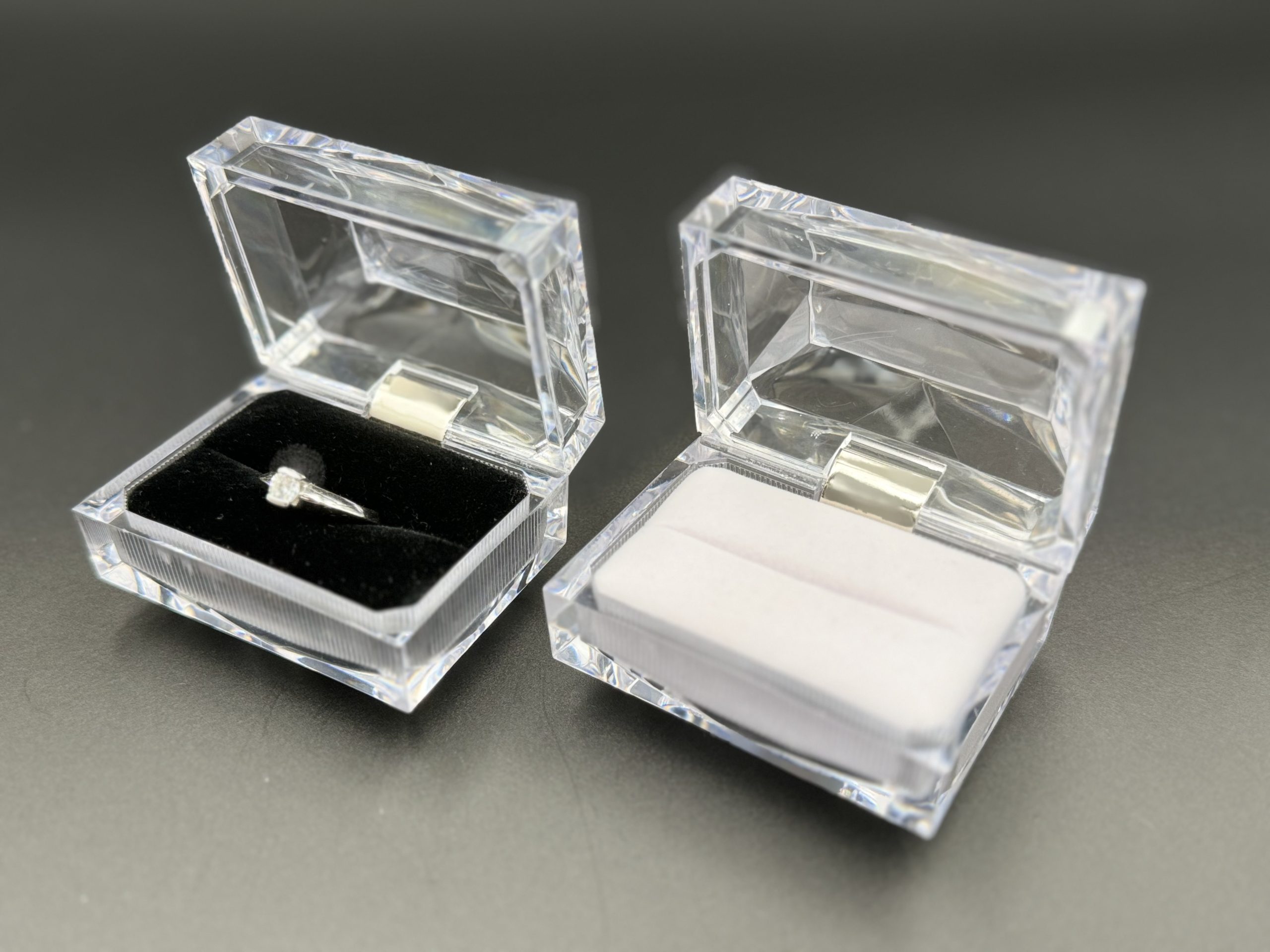
In the luxury jewelry retail and custom display sector, an acrylic jewelry box is the premier choice for brand showcases and gift packaging, offering crystal-like clarity and a modern aesthetic. However, high transparency is a double-edged sword: while it presents jewelry in its best light, it also magnifies the slightest manufacturing flaw.
For overseas brand managers, procurement leads, and QC teams, failing to catch issues like “weld lines” or “internal bubbles” during bulk inspection can cause significant quality setbacks once products hit the illuminated showroom floor.
1. Defect Breakdown: Common Acrylic Jewelry Box Flaws & Factory Solutions
When evaluating a custom acrylic packaging supplier, understanding the practical root causes behind visual defects helps you address critical issues quickly during procurement discussions.
| Defect Type | Common Cause | Factory-Side Solutions |
| Weld Lines / Flow Marks | Liquid acrylic injected from multiple paths cools too quickly before merging, leaving visible wavy patterns or shadows under light refraction. | • Optimize gate placement to keep merge lines off the front display area. • Raise mold temperatures to maintain smooth resin flow. • Fine-tune multi-stage injection speeds for uniform material flow. |
| Vacuum Voids | Commonly seen in thick-walled designs. As the outer plastic cools and hardens, the inner core stays warm; as it cools later, internal shrinkage pulls the material apart to form a hollow void. | • Increase holding pressure and packing time to ensure thorough material feeding. • For extra-thick walls, utilize 5-axis CNC machining and polishing instead of single-shot injection molding. |
| Gas & Moisture Voids | Raw acrylic pellets absorb ambient moisture, which turns to steam when heated; or poor mold venting traps air inside the plastic during injection. | • Enforce high-temperature desiccant drying on raw materials before processing. • Perform routine maintenance on mold vents to ensure air escapes freely. |
2. Top 3 Overlooked Quality Details in Inspections
During a quality inspection acrylic run, checking only the front face for clarity is never enough. Pay attention to these three hidden details that directly affect product lifespan and performance during shipping and display:
- Joint Crazing & Stress Cracks
- The Risk: Hand-assembled units or a clear acrylic jewelry box packaging with lid may look flawless when leaving the factory. However, shipping vibrations or temperature fluctuations can cause spiderweb-like micro-cracks along the joints later on.
- Factory Standard: Require post-machining annealing to relieve internal stresses, paired with specialized high-polymer structural adhesives for seamless joint filling.
- Edge Chamfering & Light Refraction
- The Risk: Rough lid and side edges, micro-chipping, or saw marks create a hazy, white appearance along the borders.
- Factory Standard: Use automated CNC precision chamfering ($R$-angle or $45^\circ$ bevel) combined with multi-stage diamond polishing to deliver smooth, crystal-clear edge refraction.
- Anti-Static & Hard Coatings
- The Risk: Untreated acrylic builds up static electricity, attracting dust on display shelves within days. Additionally, friction from metal jewelry clasps can easily leave surface scratches.
- Factory Standard: Specify optional hard coatings (to boost surface hardness) or anti-static sprays based on display needs, cutting down on daily retail maintenance.
3. QC Inspection Matrix
To help quality control teams perform quick spot checks during an acrylic jewelry box bulk order, refer to this standardized inspection matrix:
| Inspection Item | FAIL (Substandard Quality) | PASS (YUNFAI Quality Standard) | Recommended QC Tool |
| Weld Lines / Flow Marks | Visible refractive lines >3mm under angled light | No visible lines on main surfaces; minor traces allowed only on non-critical edges | 4000K LED panel + Dark matte background |
| Internal Bubbles | Voids >0.5mm present, or localized clusters of micro-bubbles | Zero bubbles >0.3mm; maximum 1–2 isolated micro-bubbles per unit | 10x Scale loupe / magnifier |
| Joint Bonding | Visible white lines, air gaps, glue marks, or micro-cracks | Seamless bonding with smooth, bubble-free adhesive fill | Angled inspection light / Temp chamber |
| Material Purity | Bluish or yellowish tint on cut edges, low clarity (often recycled PMMA) | 100% Virgin PMMA resin with light transmission over 92% | Spectrophotometer / UV aging tester |
| Scratch Resistance | Scratches appear after light wiping with a cloth | Hard-coated surface withstands routine handling and friction | Pencil hardness tester / Friction meter |
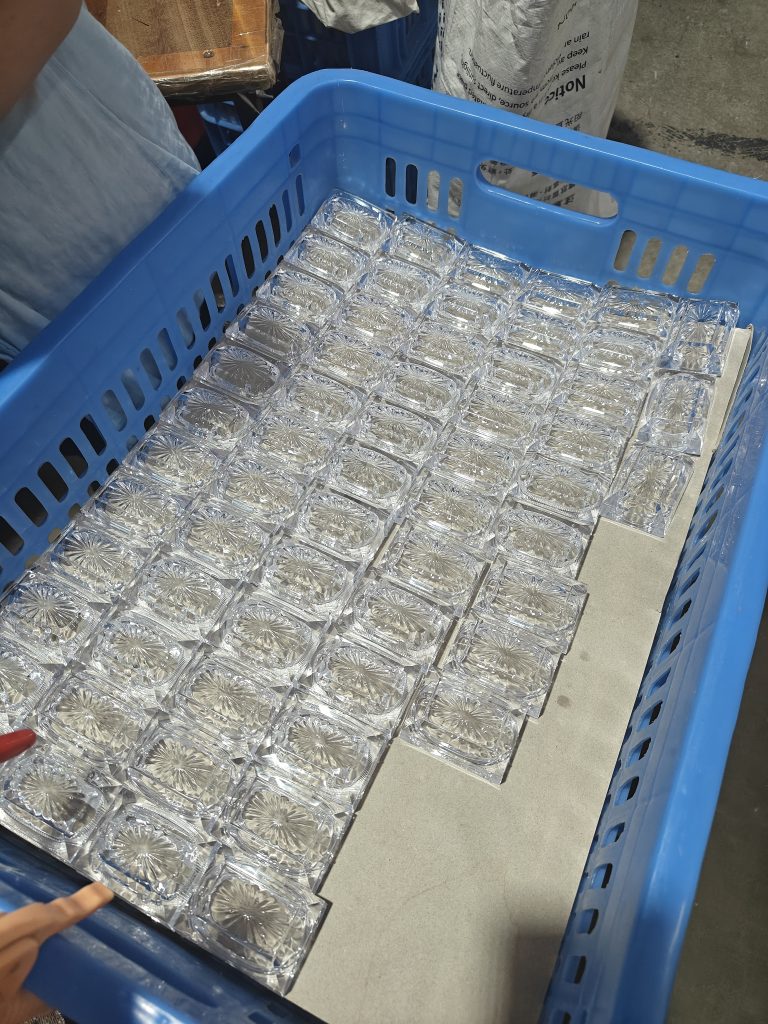
4. Frequently Asked Questions (FAQ)
- Q: How can buyers quickly tell if a supplier uses 100% virgin PMMA versus recycled material?
- A: Check the edge color on thick walls under natural light. Recycled acrylic usually displays a faint bluish or yellowish hue on cut edges and yellow-degrades over time. The YUNFAI Quality Standard relies strictly on 100% virgin PMMA resins, delivering crystal-clear transparency and long-term UV resistance.
- Q: How can sink marks and deformation be avoided on a thick-wall acrylic jewelry box?
- A: Thick-walled items require precise control over injection packing cycles. For ultra-premium thick-walled packaging, carving solid acrylic blocks via high-precision 5-axis CNC machining followed by multi-pass diamond polishing completely eliminates sink marks and internal voids.
If you are planning a new line of display packaging or facing quality challenges with your current acrylic jewelry box procurement, feel free to reach out to the YUNFAI team. Our engineering experts are ready to assist you with material consulting, process optimization, and custom samples!