

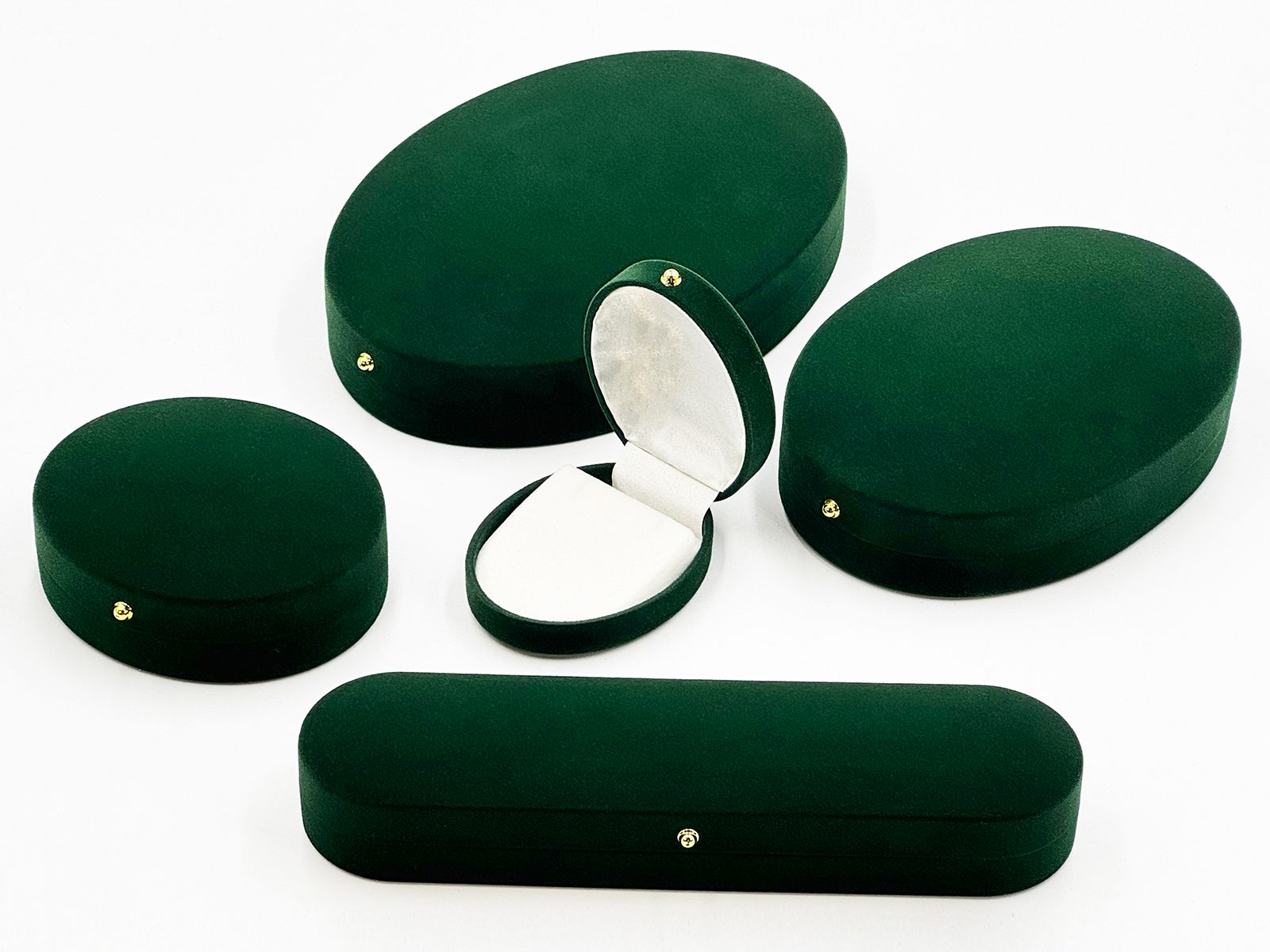
You ordered 10,000 custom flocked jewelry boxes for the upcoming sales season. After three months in warehouse storage, you pop open a carton—only to find the velvet lids covered in static-attracted gray dust, and the pressure spots completely bald from stacking friction. For jewelry brands and supply chain managers, warehouse inventory degradation is a silent profit killer.
While a flocked jewelry box offers a luxurious soft-touch experience that luxury jewelry brands love, many sourcing managers fall into the trap of evaluating samples purely in pristine office environments. They overlook the intense physical stress boxes endure during bulk shipping and pallet stacking. Drawing from YUNFAI’s years of experience in custom packaging engineering, we break down the mechanics of flock loss and static accumulation—giving you a practical guide to protect your bulk packaging inventory.
1. Root Cause Analysis: Why Flocked Jewelry Boxes Go “Bald” and Attract Dust
To eliminate warehouse loss, you must understand two primary physical phenomena affecting synthetic flocking in storage:
- Static Attraction (Dust Magnetism): Synthetic flock fibers easily accumulate triboelectric static charges during transit vibration and friction (surface resistivity $> 10^{12} \ \Omega$). Static acts like a magnet, drawing fine airborne dust deep into fiber gaps. Brushing it manually often generates more static, worsening the issue.
- Shear Stress (Shedding & Bald Spots): Boxes stacked at the bottom of pallets endure substantial vertical load. Transit vibrations create lateral shear force between overlapping lid surfaces. If the adhesive layer lacks elasticity or flock density is insufficient, fiber roots get stripped away, leaving unsightly bare patches.
Sourcing Trap Alert: Beware of Showroom Samples Soft touch does NOT equal durability! Budget suppliers often use low-density short fibers and cheap brittle sprays to achieve an artificially soft immediate touch. While pleasing on day one, these boxes collapse, mark, and shed within two weeks of pallet stacking.
2. B2B Sourcing Checklist: 5 Technical Specs Every Buyer Must Verify
When finalizing custom specifications for your flocked jewelry box order with a manufacturer, ensure the following 5 standards are explicitly detailed in your Spec Sheet and contract:
- Dye-Bath Ionic Anti-Static Treatment: Reject superficial topical anti-static sprays that degrade within 60 days. Demand ionic anti-static agents incorporated during fiber dyeing, dropping surface resistivity to >10^12 Ω for long-term charge dissipation.
- High-Solids Water-Based Acrylic Resin: Traditional solvent glues become brittle and hydrolyze in humid conditions. High-solids water-based acrylic resins remain flexible, locking fiber bases firmly and boosting shear resistance by 300%.
- High-Density Upright Nylon Filament: Avoid cheap PET flocking. Premium nylon filaments feature exceptional elastic recovery, snapping back immediately after heavy stacking without leaving permanent crush marks.
- Load-Bearing Box Architecture: Re-engineer inner rigid greyboard rims to absorb vertical load, redirecting stacking pressure away from the delicate top velvet surface.
- B2B Sealed Packaging Standard: Mandate anti-static sealed PE inner bags and 5-ply K=K reinforced corrugated outer master cartons to seal out ambient dust during sea freight and warehousing.
3. Performance Benchmarks
| Testing Metric | Standard Flocked Jewelry Box | YUNFAI Anti-Static Flocked Jewelry Box |
| Surface Resistivity (Ω) | > 10^12 (High static accumulation) | 10^8 – 10^10(Efficient anti-static dissipation) |
| Warehouse Dust Resistance | Attracts noticeable dust within 1-2 weeks | 12+ Months clean surface retention |
| Stack Shear Shedding Rate | High risk of shedding, bare spots & crushes | Nylon / Resin locked, zero visible loss |
| Flock Density & Touch | Sparse, harsh feel, easily flattened | High-density upright, ultra-silky feel |
| Safe B2B Warehouse Life | 3 – 6 Months max recommended turnaround | 18+ Months safe long-term storage |
4. Warehouse Stacking Protocol
- Column Stacking Alignment: Always stack master cartons flush corner-to-corner. Avoid overhangs or interlocked brick patterns that concentrate load on weak box centers. Aligning box corners preserves structural integrity.
- Stack Height Limits: Cap pallet height at a maximum of 5 master carton layers (under 1.6 meters) to prevent crushing bottom-tier cartons.
- Humidity Management (RH < 65% ): High humidity weakens corrugated cartons, causing them to lean and crush internal jewelry boxes. Keep storage areas well-ventilated and dry.
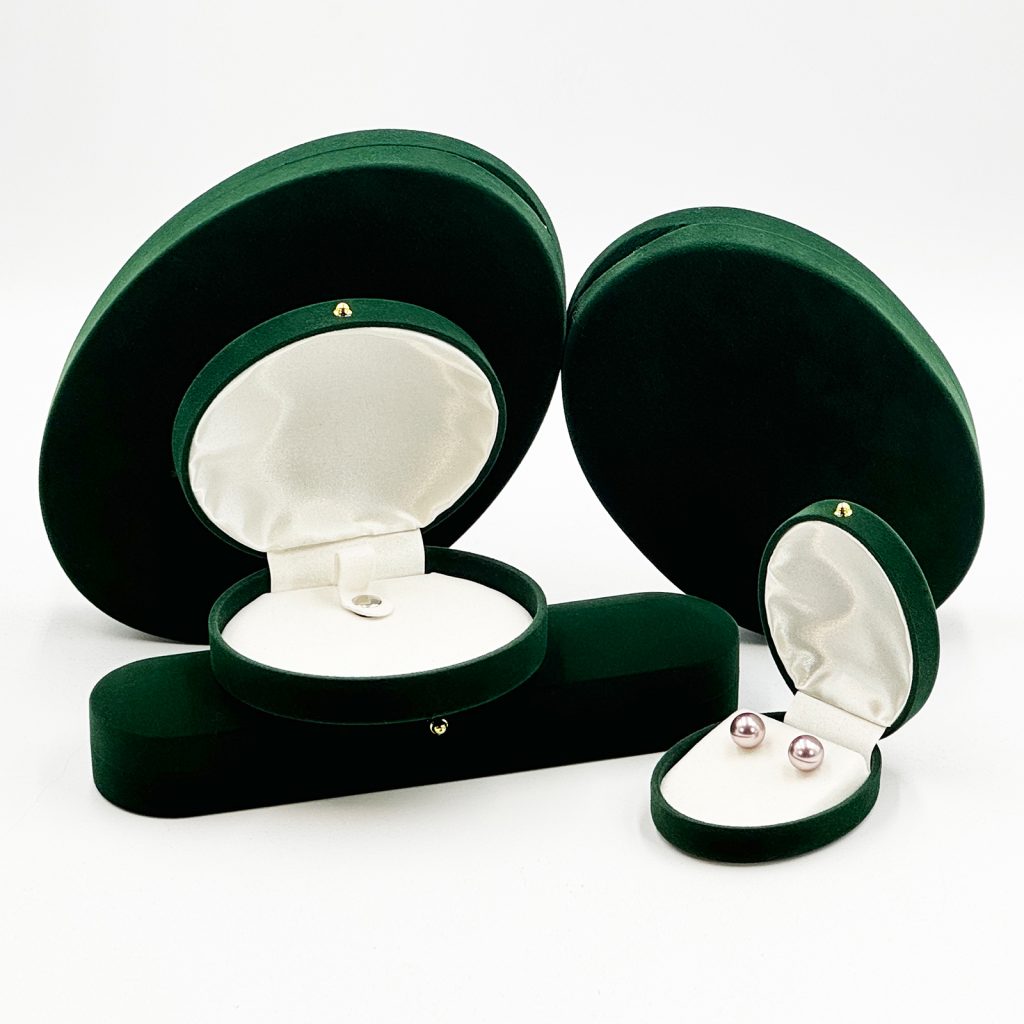
5. Frequently Asked Questions (FAQ)
- Q: Does anti-static treatment alter the soft-touch feeling of the flocked box?
A: Not at all. YUNFAI uses ionic surface dissipation technology integrated into the fibers. It maintains full softness while enhancing upright fiber alignment for a richer, premium texture. - Q: Will high-density nylon flocking scratch delicate gold or gemstone jewelry?
A: Absolutely not. Our long-filament nylon passes strict surface abrasion tests. Mohs hardness is far below precious metals and gemstones, ensuring zero micro-scratches on polished surfaces. - Q: How should we clean existing dusty flocked boxes already sitting in our warehouse?
A: Never use wet cloths or stiff brushes! Use a soft anti-static lint roller or a low-suction vacuum with a soft brush attachment.
Warehousing shouldn’t compromise packaging quality. Understanding fiber physical characteristics and implementing preventive technical specs ensures your custom boxes arrive in pristine condition every time. If you have specific questions about anti-static engineering or load-bearing box design, reach out to the YUNFAI Packaging Engineering team to request physical samples and test reports for evaluation.