

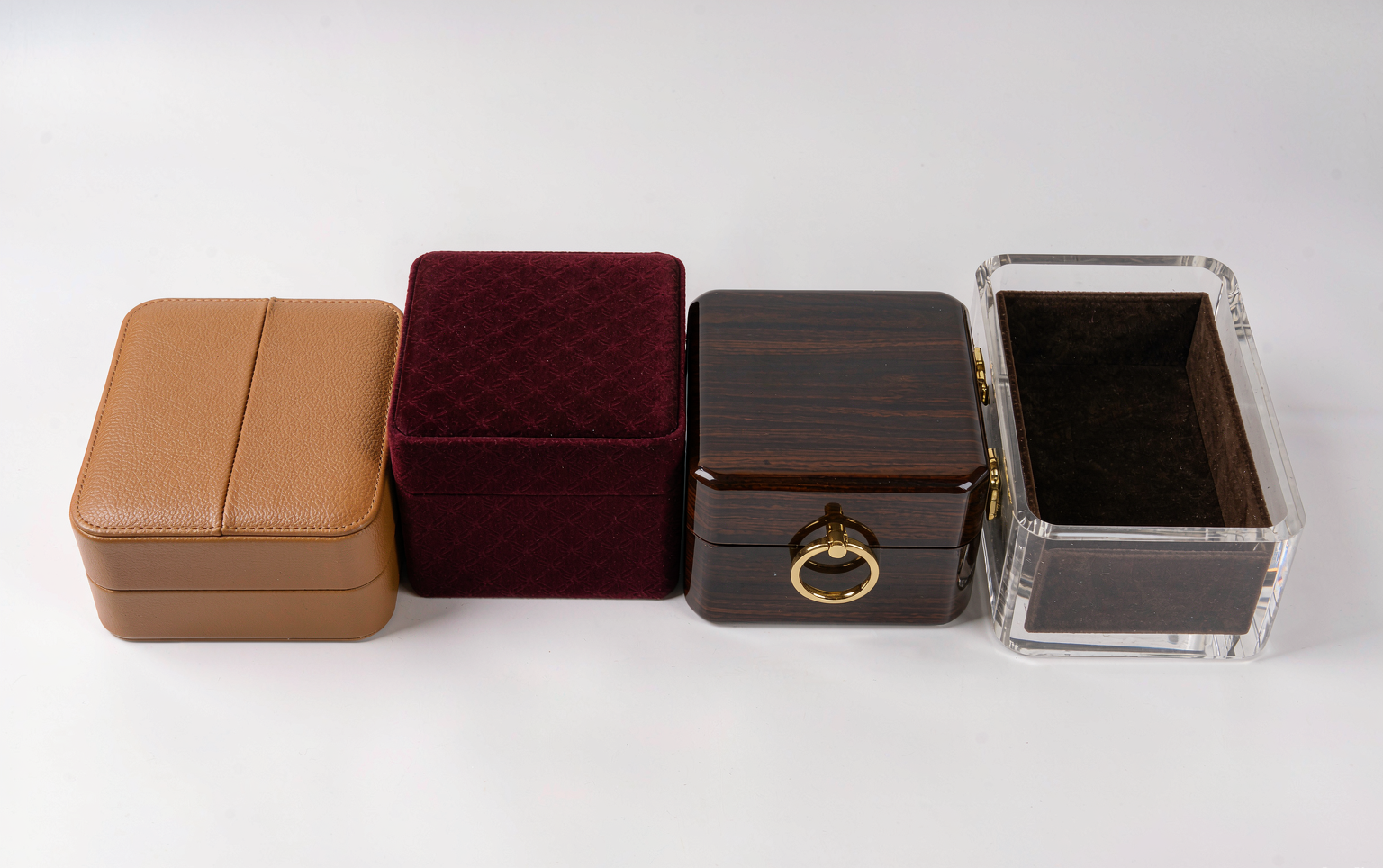
Product Type: Custom jewelry packaging
Material Focus: PU leatherette / velvet flocking / high-gloss wood / acrylic / paper / microfiber
Brand Tier: Mid-market to luxury
Sourcing Goal: Match material to positioning, cost, protection, and lead time
A jewelry brand’s packaging is not a finishing touch tacked onto the end of a product cycle. It is a procurement decision that sits where brand perception, unit economics, and logistics survival collide. When a sourcing manager opens a quotation sheet from a packaging factory and sees six material options listed—PU leatherette, velvet flocking, high-gloss wood, clear acrylic, kraft paper, microfiber suede—the per-unit prices may sit only cents apart, but the downstream consequences diverge sharply. The same box that looks flawless in a factory showroom can arrive dented at a retailer’s warehouse three time zones away. A material that feels luxurious in hand can be the wrong cultural signal for a market that reads sustainability as the real premium.
This guide breaks down how each mainstream material performs across the criteria that actually matter to B2B buyers—brand positioning fit, per-unit cost band, protection of the jewelry inside, behavior during international shipping, and realistic production lead times—so procurement teams can match material to strategy instead of defaulting to the cheapest line on the quote.
The Sourcing Challenge
Most jewelry brands arrive at a material decision the same way: they collect quotations from two or three factories, compare unit prices, pick the option that looks reasonable, and move on. The problem is that “looks reasonable on a quotation” and “performs well across a full product lifecycle” are measuring different things.
When Six Quotations Look Equally Good on Paper
A quotation sheet tells you the unit price, the MOQ, and an estimated lead time. It does not tell you how the material behaves when 2,000 boxes are stacked in a shipping container for three weeks, how the finish ages after six months on a retail counter under showcase lighting, or whether the interior lining you selected actually holds the specific jewelry piece in place during transit. These are the gaps that show up after the purchase order is signed—and by then, switching materials means restarting the production timeline.
The sourcing challenge is not a lack of options. It is that the options all look similar on paper until you stress-test them against the real conditions the box will face: international freight, warehouse storage, retail display, and years of daily use in a customer’s home. The brands that navigate this well do not pick the “best” material. They pick the material whose strengths align with their brand tier, their product type, and their logistics reality—and whose weaknesses they can engineer around.
Material Breakdown: Six Options on the Production Floor
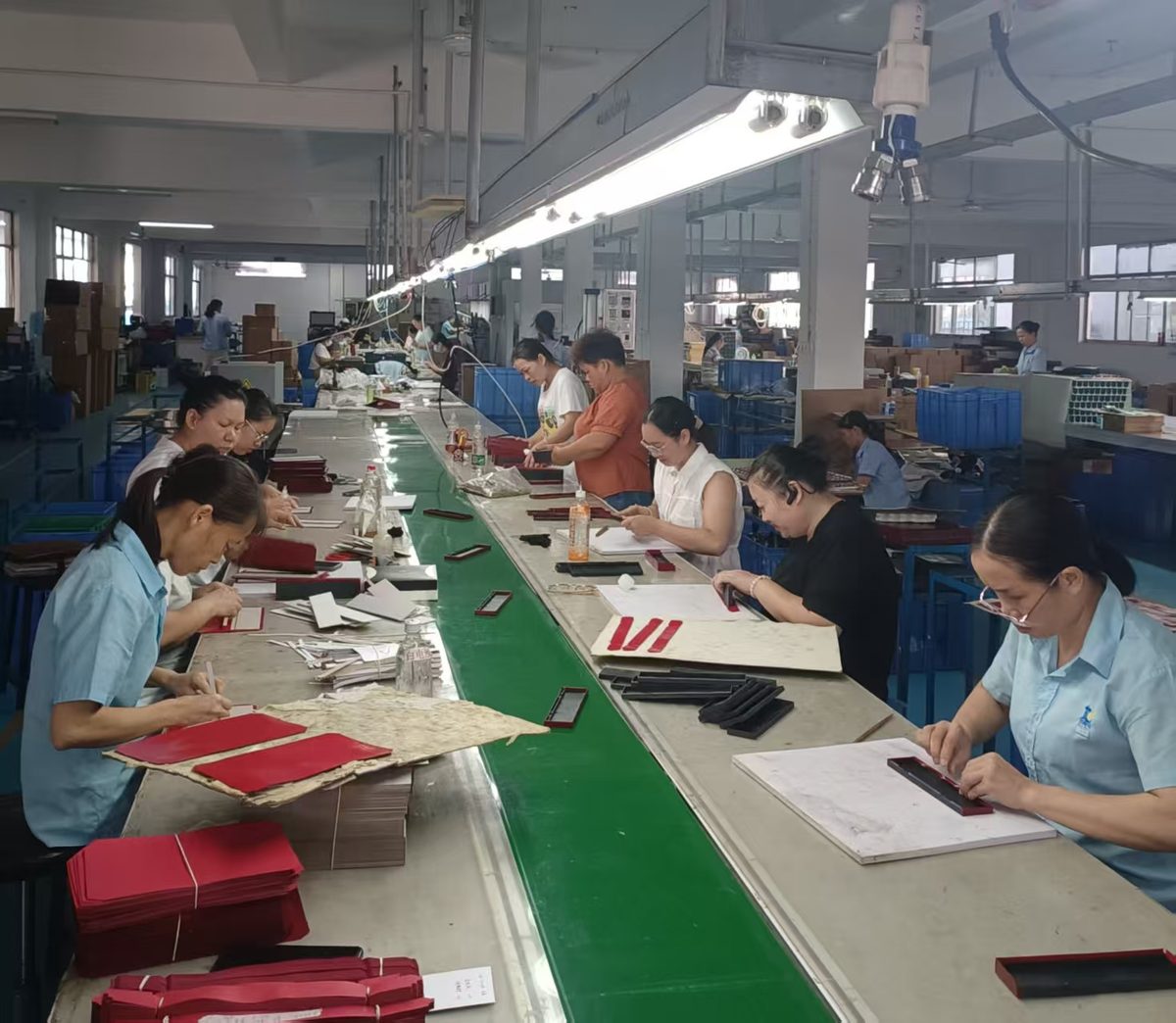
The comparison below is built from production-floor behavior, not catalog copy. Each material has a sweet spot and a failure mode—and the sourcing team’s job is to know both before the order is placed.
PU Leatherette Jewelry Boxes
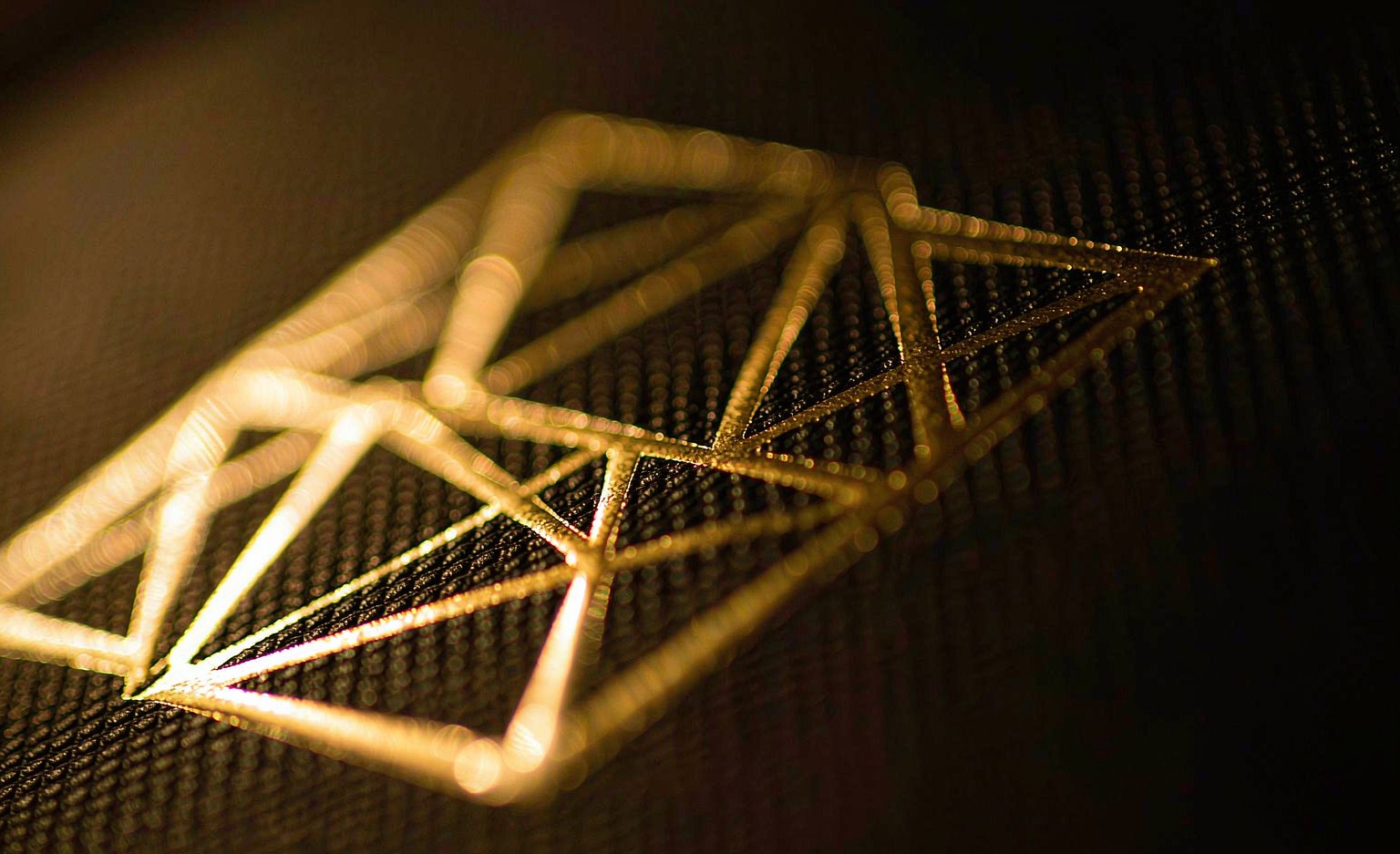
Surface Options: Pebbled / crocodile-embossed / saffiano / flat matte
Closure Types: Magnetic snap / friction hinge / push-lock
Typical MOQ: 500–1,000 units
Lead Time: 15–25 days
Per-Unit Cost Band: Low to mid
PU leather is the workhorse of mid-market jewelry packaging. It delivers a tactile, leather-like surface at a fraction of genuine leather’s cost, accepts debossing and foil stamping cleanly, and holds up well in transit because the material has slight give. For brands selling rings, earrings, or pendants in the $50–$500 retail range, PU leatherette boxes hit a practical balance: substantial enough to gift, cheap enough to scale across thousands of units.
Where It Wins
PU leatherette’s real strength is versatility. The surface accepts a wide range of textures—pebbled for a classic feel, crocodile-embossed for a fashion-forward read, saffiano for a structured, contemporary look—which means a brand can differentiate through surface treatment without changing the underlying material or tooling. MOQ stays flexible because standard PU box shapes share tooling across many customers, and production runs are fast and predictable.
Where It Falls Short
Because PU leatherette is the most commonly used material, it does not inherently signal distinction. A flat PU box with no texture reads as generic. The brand has to do the differentiation work through color, texture, and hardware rather than relying on the material itself to carry the brand. It also does not carry the “occasion” weight of wood—the customer perceives it as a good, functional box, not an heirloom object.
Velvet Flocked Jewelry Boxes
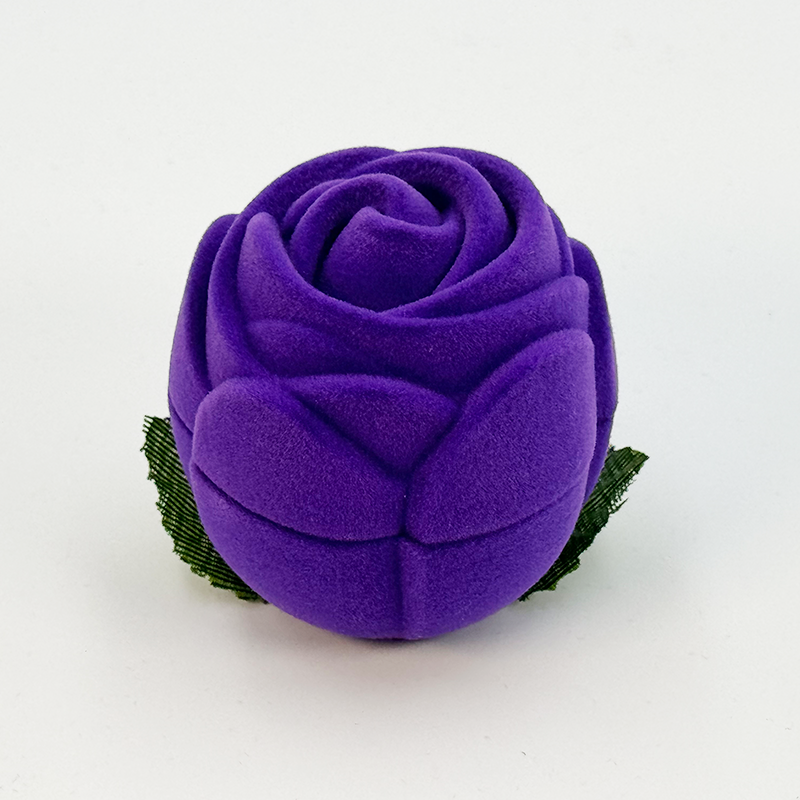
Surface Options: Deep-pile velvet / short-pile suede-touch
Color Saturation: High (deepest color rendering of any material)
Closure Types: Magnetic / metal clasp / hinge
Typical MOQ: 500–1,500 units
Lead Time: 20–30 days
Per-Unit Cost Band: Mid
Flocking—the process of applying fine fibers to a surface to create a velvet-like texture—produces some of the most visually striking jewelry boxes available. Color saturation runs deeper than woven fabric, the surface catches light in a way that photographs beautifully, and the tactile softness creates an immediate sense of luxury at first touch. Flocked boxes are especially strong for engagement rings, bridal jewelry, and seasonal gift collections where the unboxing moment is part of the product’s emotional value.
Where It Wins
No other material matches velvet flocking for visual impact at the moment the lid lifts. The color depth and light absorption make the jewelry inside visually pop, which is the single most important perceptual trigger in the unboxing sequence. For brands where the unboxing photograph is a marketing channel—engagement rings, bridal, high-end gifting—flocked boxes deliver disproportionate perceptual return per dollar spent.
Where It Falls Short
Flocked surfaces can show pressure marks if boxes are stacked tightly during long-haul shipping, and the fibers can flatten in humid warehouse conditions if the storage environment is not controlled. This means the scrap rate in transit runs slightly higher than leatherette or wood, and the brand’s QA on arrival matters more. Brands sourcing flocked boxes for international distribution should ask the factory about internal rigid cardboard inserts that prevent the lid from pressing directly onto the flocked surface during transit.
High-Gloss Wooden Jewelry Boxes
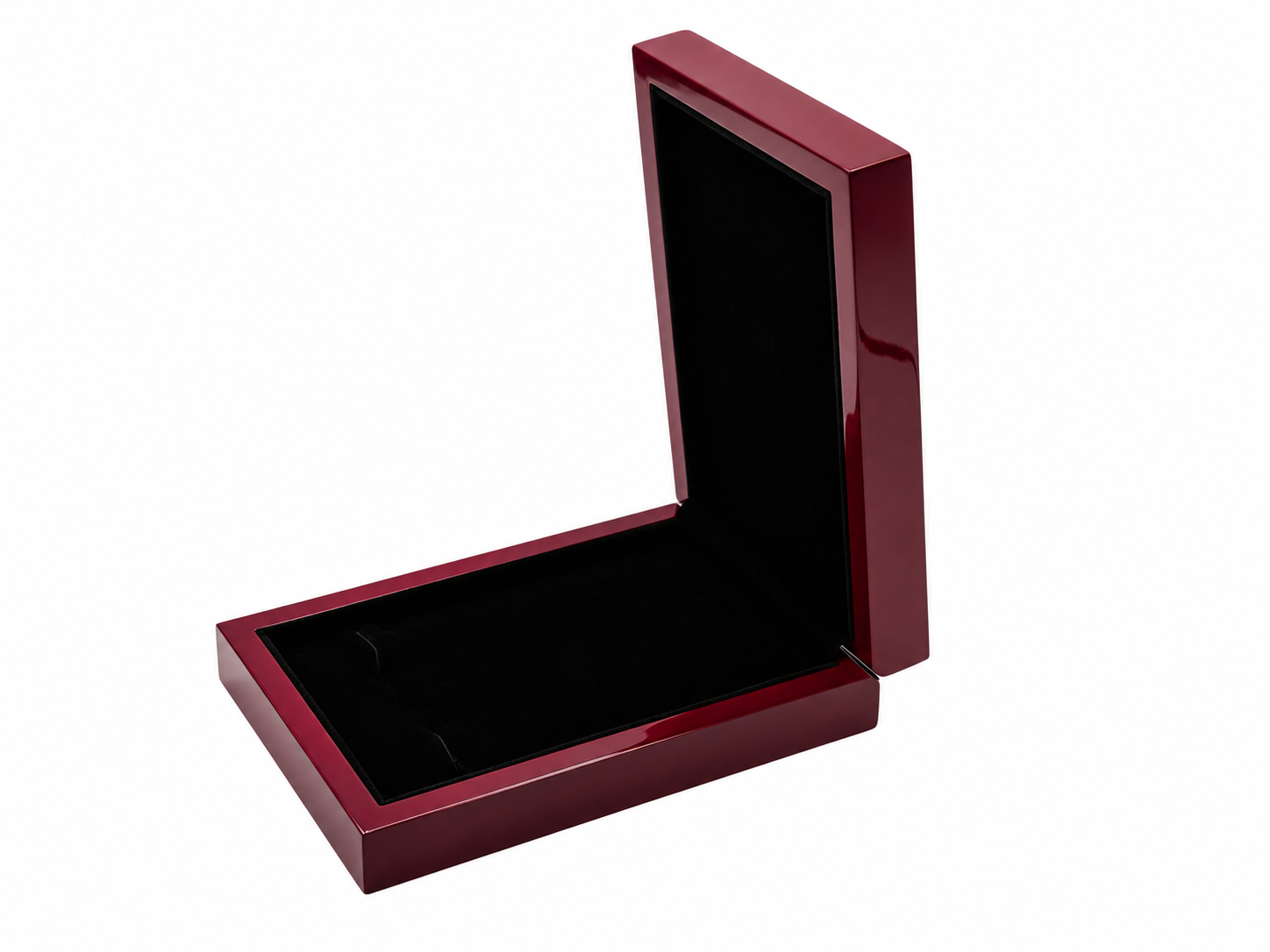
Wood Types: Mahogany / walnut / cherry / ebony
Finish: Multi-layer piano lacquer (hand-sanded and polished)
Hardware: Brass / gold-tone / brushed nickel
Typical MOQ: 300–800 units (less flexible; dedicated tooling common)
Lead Time: 30–45 days (lacquer curing cannot be rushed)
Per-Unit Cost Band: High
A piano lacquer wooden box is the most expensive standard material option, and it is the one that most dramatically shifts how a product is perceived. The lacquer finish—applied in multiple sanding and polishing cycles—produces a depth and reflectivity that no synthetic material replicates convincingly. Combined with brass or gold-tone hardware and a velvet or suede interior, a high-gloss wooden box turns a jewelry purchase into an event. This is why heritage brands, limited-edition releases, and high-ticket pieces ($1,000+ retail) almost always default to wood.
Where It Wins
A high-gloss lacquer finish triggers a specific cultural and tactile response: this is an object associated with ceremony and permanence. Piano lacquer is the finish used on musical instruments and heirloom furniture. When a customer handles a box with that finish, the depth of the lacquer—light sinking into the surface rather than bouncing off flatly—registers as expense before the price tag is known. For flagship pieces, limited editions, and bridal—pieces that often sit on jewelry display stands before reaching the customer—no other material does this perceptual work as effectively.
Where It Falls Short
Cost is the obvious constraint—per-unit pricing runs meaningfully higher than leatherette or paper, and MOQ is often less flexible because each design may involve dedicated woodworking tooling. Lead time is longer because lacquer curing is a chemical process that cannot be safely accelerated without risking micro-cracking. For brands whose volume does not justify dedicated tooling, working with a factory that maintains an in-house mold library of over a thousand existing designs can reduce both cost and lead time, since the brand can customize finish, interior, and hardware on an existing wooden box chassis rather than tooling from scratch.
Transparent Acrylic Jewelry Boxes
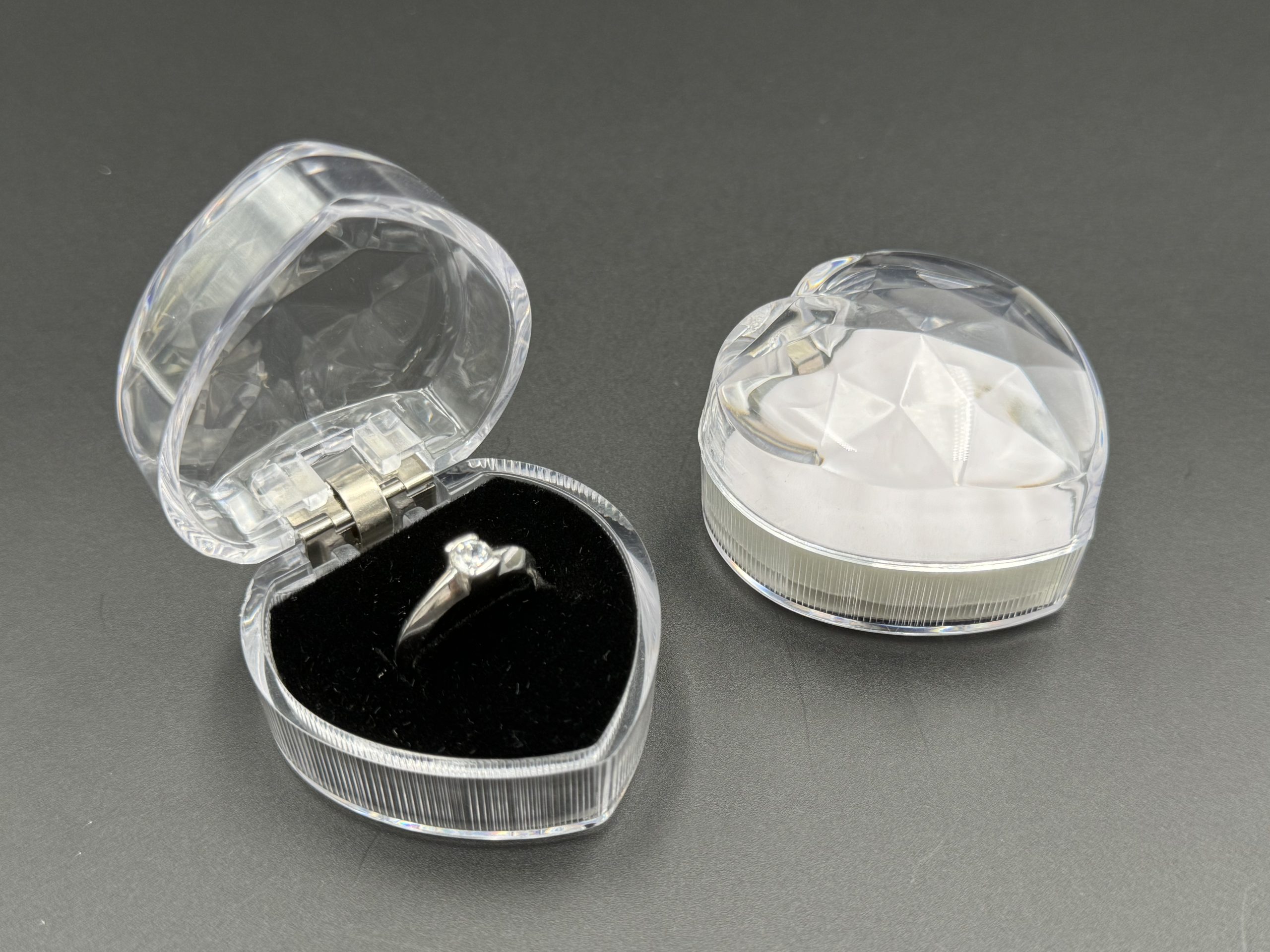
Material: Optical-grade acrylic / PMMA
Surface: Crystal-clear / tinted / frosted
Interior Insert: Velvet / suede / foam / EVA
Typical MOQ: 500–1,000 units
Lead Time: 15–25 days
Per-Unit Cost Band: Mid
Clear acrylic boxes occupy a distinct psychological space: they let the jewelry sell itself. There is no material between the customer and the product, which reads as confidence. Acrylic is also rigid, stackable, and resistant to the compression damage that affects softer materials. Modern brands targeting younger demographics—particularly those selling minimalist silver or lab-grown diamond jewelry—often use acrylic boxes to reinforce a clean, transparent brand ethos.
Where It Wins
Visibility is the selling point. In a retail display or a social media photograph, an acrylic box puts the product in full view with zero visual barrier, which works powerfully for brands whose aesthetic is built on transparency and modernity. The rigidity of acrylic also means it survives stacking and compression in transit better than leather or velvet.
Where It Falls Short
Acrylic surfaces scuff more easily than leather or wood. The factory must apply protective film during production and shipping, and the brand’s fulfillment team needs to handle boxes carefully to avoid scratching before they reach the customer. Acrylic is also a less premium signal than wood or leather in traditional luxury markets—it works best when the brand’s positioning is explicitly modern rather than classical.
Paper Jewelry Boxes
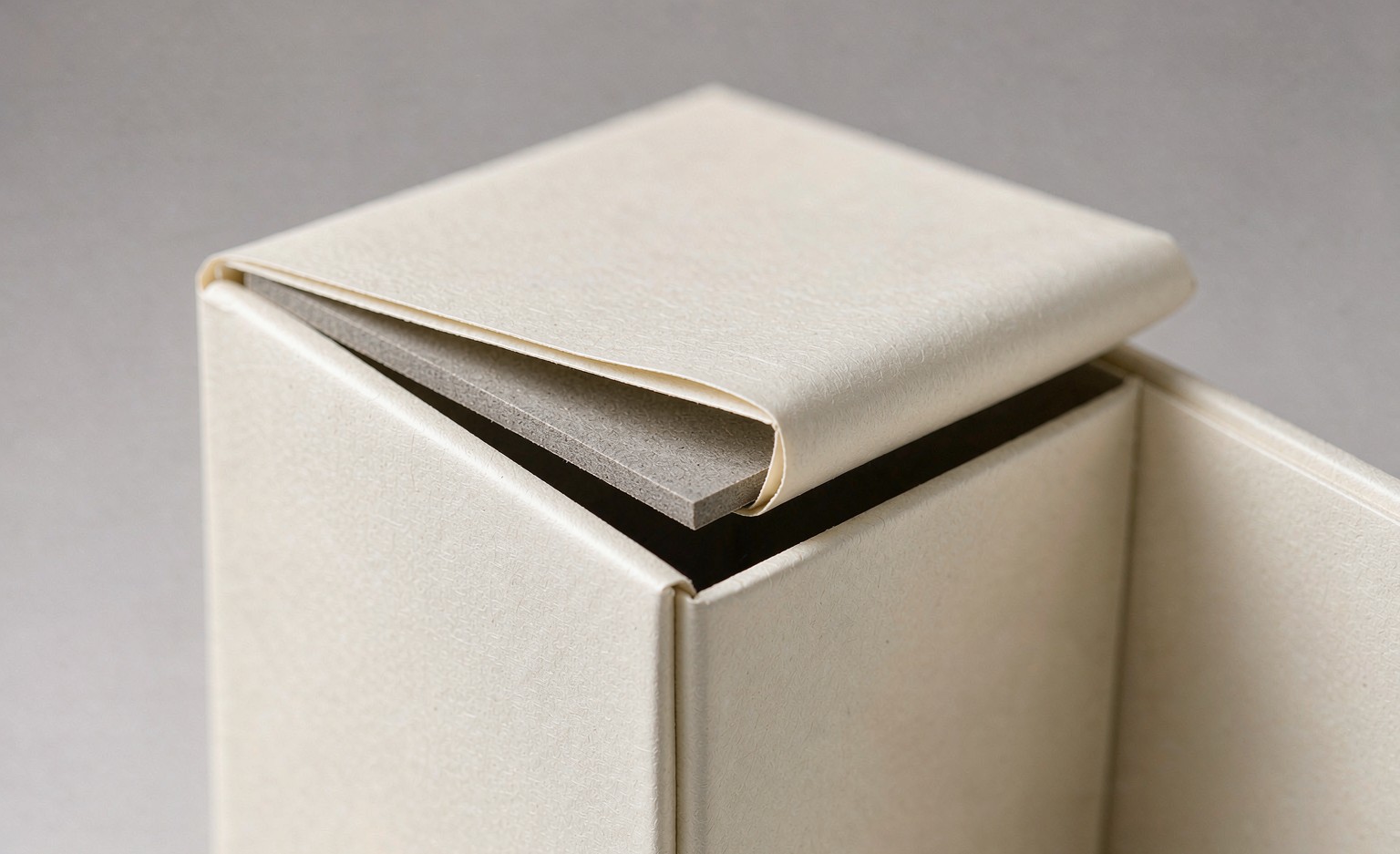
Material: Coated paperboard / kraft / textured art paper
Finish Options: Foil stamping / embossing / matte lamination / spot UV
Closure: Magnetic / tuck-top / lift-off lid
Typical MOQ: 1,000–3,000 units
Lead Time: 12–20 days
Per-Unit Cost Band: Low
Paperboard boxes are the lowest-cost option and the most naturally positioned for sustainability messaging. Modern paper jewelry boxes—especially those with textured finishes, magnetic closures, and foil accents—can look far more premium than the brown kraft boxes that gave paper packaging its budget reputation. For brands built on eco-conscious positioning, or for high-volume retail jewelry where the box is functional rather than emotional, paper is often the right call.
Where It Wins
Cost and sustainability. No other material delivers a presentable jewelry box at a lower per-unit price, and no other material aligns as naturally with brands whose marketing leans on environmental responsibility. Modern finishing techniques—foil stamping, embossing, spot UV—mean a paper box can look intentional and designed rather than cheap, provided the brand invests in surface treatment.
Where It Falls Short
Protection. Paperboard does not cushion impacts the way leather or velvet does, and it is vulnerable to moisture. Brands using paper boxes for fragile pieces or for international shipping must pair the box with a well-designed interior insert (EVA foam, molded pulp, or velvet-lined card) and a secondary shipping carton. Without that pairing, the jewelry arrives looking like it came in a disposable container.
Microfiber Jewelry Boxes
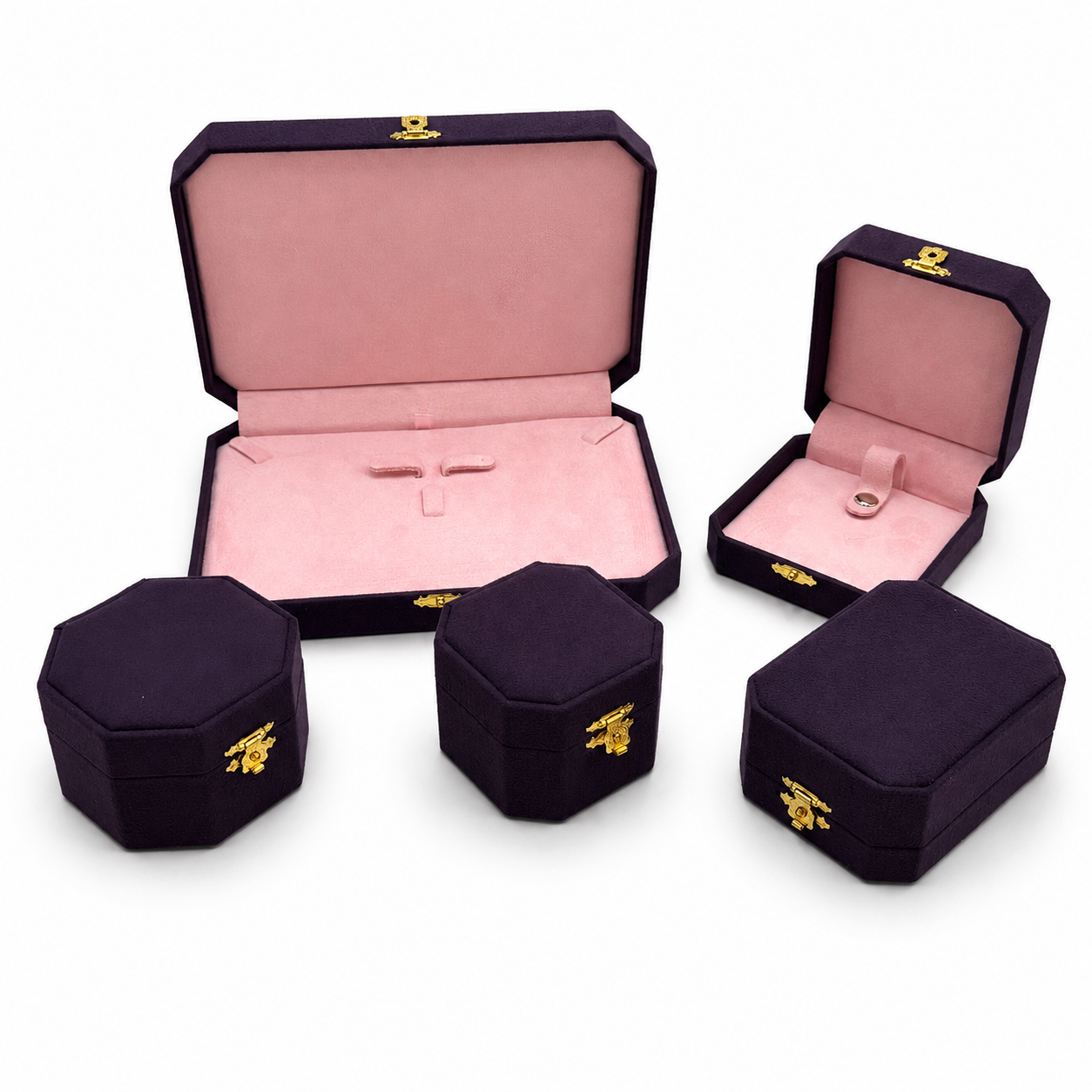
Surface: Matte suede-touch / short-pile
Lining Options: Contrast suede / velvet / flocked board
Typical MOQ: 500–1,200 units
Lead Time: 18–28 days
Per-Unit Cost Band: Mid
Microfiber suede sits between velvet and leather in both feel and cost. It has the soft, matte surface of suede leather but is synthetic, which means consistent color matching across production runs and no variation from hide to hide. Microfiber is more durable than flocking under handling and shipping, and it does not show pressure marks as readily. For brands that want a tactile luxury feel without the cost and lead time of high-gloss wood, microfiber is often the hidden sweet spot.
Where It Wins
Consistency and durability. Because microfiber is synthetic, every production run matches the color and texture spec exactly—there is no hide-to-hide variation, no batch drift. It ships better than flocking (no pressure-mark transfer), feels more premium than flat PU leatherette, and costs a fraction of high-gloss wood. For brands that need the velvet feel but ship internationally at volume, microfiber is the material that lets them have both.
Where It Falls Short
Microfiber does not have the dramatic visual impact of velvet flocking (the color saturation is flatter) or the ceremonial weight of high-gloss wood. It is a quietly premium material rather than a show-stopping one, which means it works best as the backbone of a brand’s packaging system rather than as the hero box for a flagship launch.
Material Comparison at a Glance
The table below summarizes how the six materials compare across the five criteria that drive most sourcing decisions. Cost bands are relative to each other, not absolute market prices—actual pricing depends on size, customization, and order volume.
| Material | Per-Unit Cost | Jewelry Protection | Shipping Durability | Lead Time | Best Brand Tier |
|---|---|---|---|---|---|
| PU Leatherette | Low–Mid | Good | Good | 15–25 days | Mid-market |
| Velvet Flocked | Mid | Good | Moderate (pressure marks) | 20–30 days | Mid–Premium |
| High-Gloss Wood | High | Excellent | Good (if packed correctly) | 30–45 days | Premium / Luxury |
| Acrylic | Mid | Moderate | Good (scratch risk) | 15–25 days | Contemporary |
| Paper | Low | Weak (needs insert) | Moderate | 12–20 days | Volume retail / Eco |
| Microfiber | Mid | Good | Good | 18–28 days | Mid–Premium |
The Decision Framework: Four Questions Before the PO
Material selection narrows to four operational questions that separate a good sourcing decision from a regrettable one. These are what experienced buyers ask after the aesthetic decision is made and before the purchase order is signed.
1. What Is the Realistic MOQ and Lead Time for My Specific Customization?
A factory’s headline MOQ may apply only to a standard box with no custom printing. Once a brand adds a debossed logo, a custom interior color, or a non-standard size, MOQ and lead time can shift substantially. Ask which elements use existing tooling and which require new tooling.
2. How Will the Box Survive International Shipping?
Ask the factory how they pack for export: individual sleeving, rigid carton dividers, climate-rated materials. High-gloss lacquer can micro-crack under temperature swings; flocking can transfer marks under friction.
3. Does the Interior Material Match the Jewelry It Holds?
A diamond solitaire needs a firm, precisely cut slot. A chain necklace needs a high-friction flat surface. Cufflinks need individual compartments with pull-out pads. Specify the interior against the specific piece, not generically.
4. Does This Material Match the Brand’s Price Tier?
If the box feels like it belongs to a product one tier above the jewelry’s price point, the choice is well calibrated. Customers reward slight over-delivery on packaging. They punish obvious under-delivery.
Why a Source Factory Changes the Math
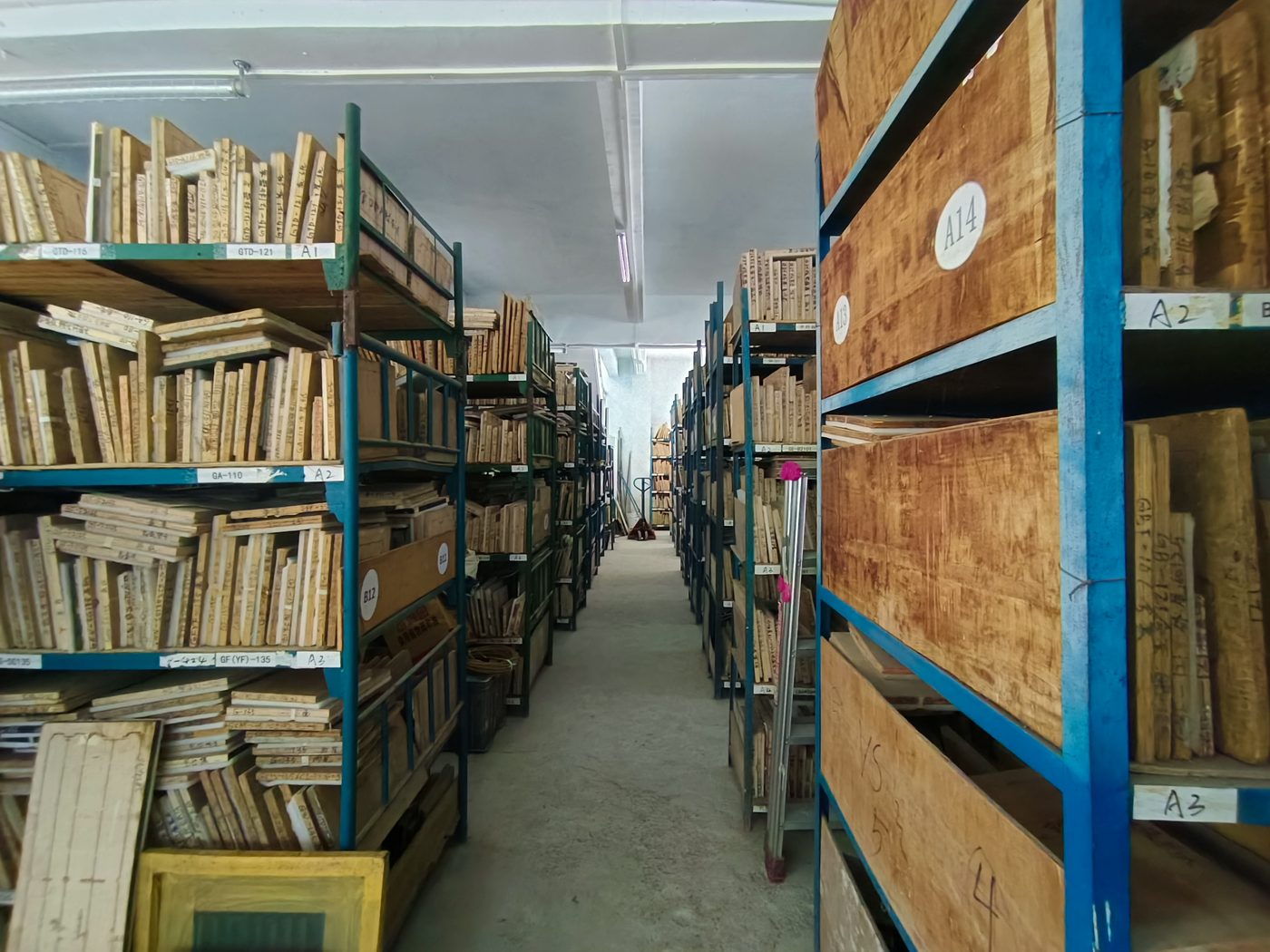
The difference between sourcing from a trading company and sourcing from a source factory becomes most visible at the moment a brand wants to iterate on material. A trading company can quote a PU leatherette box, but when the brand asks to switch the interior from velvet to microfiber, or to test a high-gloss wood prototype alongside a leatherette version, the trading company has to relay that request to an upstream factory it does not control. Iteration slows, communication degrades, and the brand ends up compromising on the material to avoid delay.
A source factory with integrated design, production, and quality control under one roof can produce parallel material samples in days rather than weeks. When a brand is still deciding between velvet flocking and microfiber for a new collection, the ability to hold both prototypes in hand—produced by the same team that will run the production order—is the difference between a confident material decision and a guess.
YUNFAI has operated as a source factory since 1998, with a 20,000+ square meter production base, over 1,000 sets of in-house molds, and a 99.8% on-time delivery rate maintained across nearly three decades. That infrastructure exists because material decisions in jewelry packaging are rarely final on the first quotation—they require iteration, sampling, and a production partner who can execute the chosen material at scale without quality drift.
Frequently Asked Questions
What is the minimum order quantity for custom jewelry boxes?
MOQ depends on the material and the level of customization. For PU leatherette and paper boxes using existing tooling, MOQ typically starts around 500–1,000 units. For high-gloss wooden boxes with dedicated tooling, MOQ may start higher. When a brand works from an existing box chassis in a factory’s mold library and customizes only finish, interior, and hardware, MOQ stays more flexible than tooling from scratch.
Which material is best for international shipping?
PU leatherette, microfiber, and acrylic handle international shipping most reliably because they resist compression damage and pressure-mark transfer. Velvet flocking requires more careful packing—rigid internal inserts and individual sleeving—to prevent surface marks during transit. High-gloss wood ships well when the factory uses adequate carton insulation against temperature swings.
Can I get samples in multiple materials before committing to a production run?
Yes. A source factory with integrated production can produce parallel samples across different materials—PU leatherette, velvet flocking, high-gloss wood, acrylic, microfiber—so the brand can compare them side by side before placing the production order. This is the most reliable way to make a material decision, because it lets you evaluate tactile feel, color rendering, and protection performance with production-quality prototypes rather than catalog images.
How long does production take for each material?
Paper and PU leatherette run fastest, typically 12–25 days. Microfiber and velvet flocking run 18–30 days. High-gloss wooden boxes take 30–45 days because the lacquer curing process cannot be safely accelerated. These are production lead times after sample approval; add time for sampling, iteration, and shipping to the destination market.
What is the most cost-effective material for a premium feel?
Microfiber suede and textured PU leatherette (crocodile-embossed or saffiano) deliver the highest premium feel per dollar. Microfiber offers a velvet-like tactile experience with better shipping durability and lower batch drift. Textured PU leatherette distinguishes through surface treatment without the cost of wood. Both avoid the cost and lead-time penalty of high-gloss wood while still reading as intentional and designed.
Do you offer interior customization to match specific jewelry pieces?
Yes. Interior lining material, color, and slot structure can all be customized to the specific jewelry type—ring slots, necklace panels, earring posts, cufflink compartments. The interior should be specified against the piece, not chosen generically, because the interior does the actual protective work during shipping and display.
Compare Materials Before You Commit
Choosing a jewelry box material is ultimately an act of alignment: aligning the tactile signal the customer receives with the price they paid, the brand story they were told, and the logistics reality of getting the product to their door. No single material is universally correct. The right choice depends on where the brand sits in the market, what the jewelry inside demands for protection, and how much iteration the sourcing timeline allows.
If your brand is evaluating materials for a new collection or a packaging refresh, the most efficient next step is to request parallel material samples from a single source factory—so the comparison happens with production-quality prototypes, not catalog images. Share your product specifications, target retail price, and destination markets with YUNFAI, and our design team will recommend the material pairing that fits both the brand and the budget.