

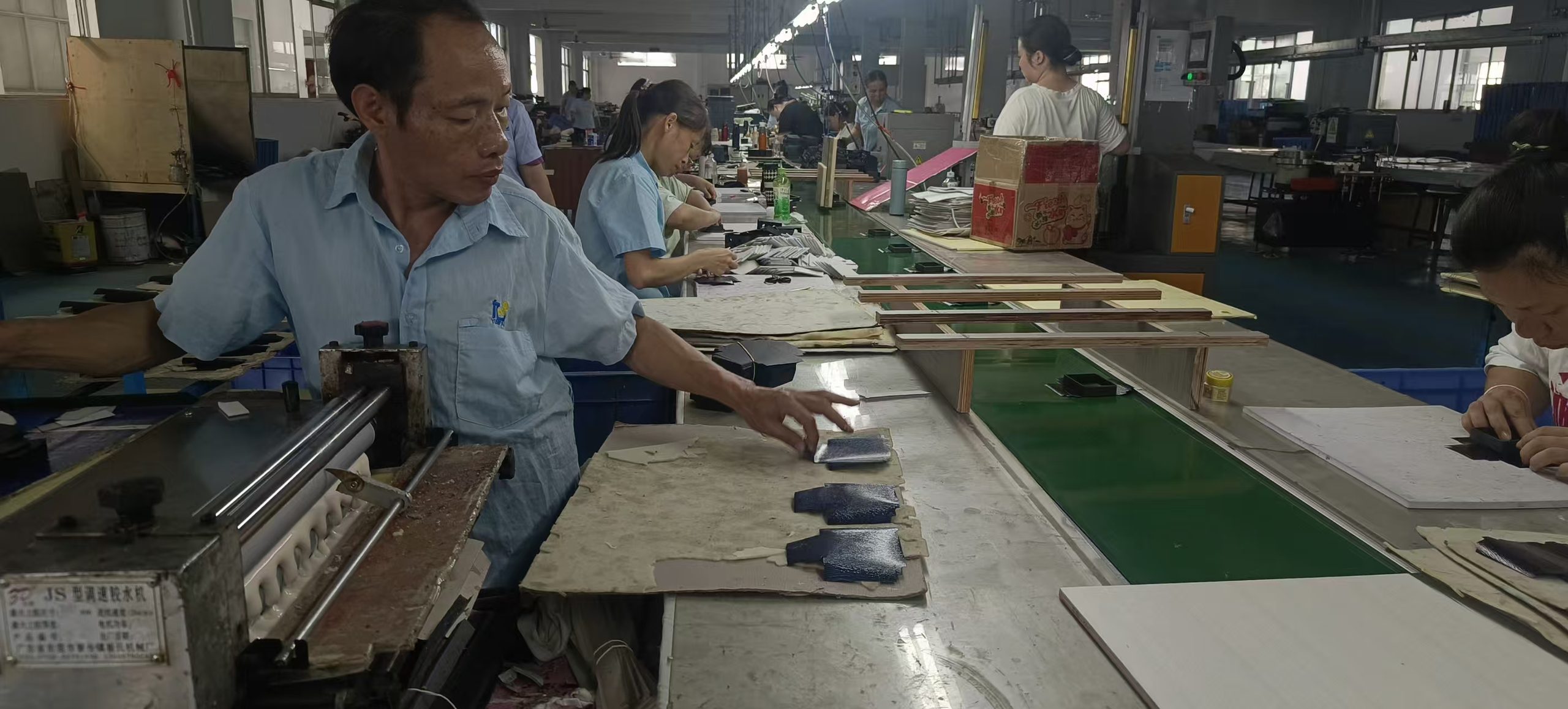
You’ve spent a fortune on your retail lighting — 4000K–6000K LED spotlights beaming straight down onto your counter. Under that intensity, a wooden jewelry box that looked flawless in the sample room can suddenly reveal every fingerprint, hairline scratch and glue mark. The finish you choose matters more than the wood itself.
As a wooden jewelry box manufacturer with nearly 30 years of finishing experience, we’ve tested all three mainstream finishes under retail-grade lighting. Here’s an honest comparison — including where each one fails.
Quick Comparison Table
| Dimension | High-Gloss Piano Lacquer | Matte / Velvet-Touch Lacquer | Wood-Grain Paper Veneer |
| Fingerprint visibility under spotlight | High — shows every touch | Low — best at hiding prints | Low–Medium |
| Scratch resistance | High with 2H+ hardness coating | Medium — scratches appear as white marks | Low — film peels, cannot be repaired |
| Light reflection | Mirror-like, maximum “luxury glow” | Soft, diffused, no glare | Natural, low reflectivity |
| Perceived value | Highest | Modern, minimalist | Entry-level, volume-driven |
| Relative cost | Highest | Medium | Lowest |
| Best for | Heritage & fine jewelry counters | Contemporary brands, matte-minimal boutiques | E-commerce, bulk gifting programs |
High-Gloss Piano Lacquer: Maximum Brilliance, Maximum Exposure
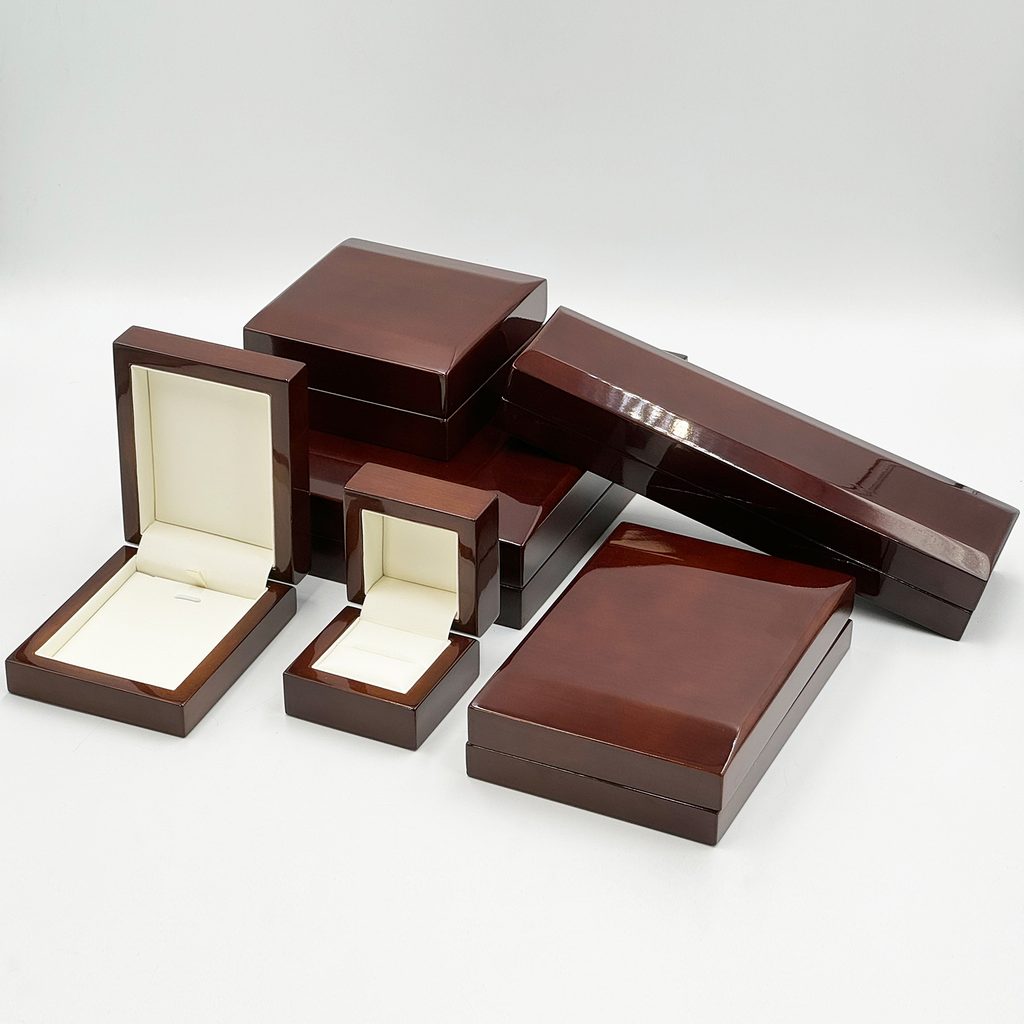
Nothing catches a spotlight like a multi-layer piano lacquer finish — the deep reflections are what make a mahogany box read as “luxury” from three meters away.
The trade-off is honest: glossy surfaces show fingerprints more than any other finish. Every customer pick-up leaves a print. This is why the coating hardness, not the gloss level, determines whether your boxes still look new after a quarter on the counter. A proper 2H-hardness lacquer resists hairline scratches from rings, buckles and cleaning cloths; fingerprints themselves wipe off easily on a sealed high-gloss surface — the real enemy is micro-scratching that scatters light.
If you’re weighing high-gloss options, read our deep-dive on why some piano lacquer boxes feel luxury while others look like cheap plastic, and our finishing guide on stopping scratches and fingerprints with 2H-hardness piano lacquer.
Choose high-gloss when: your brand positions at fine jewelry price points, your counter is staffed (boxes handled by staff, not self-serve), and your lighting design already uses warm accents that benefit from mirror reflections.
Matte / Velvet-Touch Lacquer: The Fingerprint Hider
Matte lacquer diffuses light instead of reflecting it, which makes it the most forgiving finish under harsh spotlights. Fingerprints — the number one complaint from retail counters — are nearly invisible on a properly cured matte surface.
But matte has its own weakness: scratches show up as pale white marks against the low-sheen background, and they can’t be buffed out the way gloss can. Quality matte finishes therefore depend on a flexible, well-cured topcoat. Cheap matte coatings also tend to yellow or develop “shiny patches” where hands touch repeatedly.
Choose matte when: your store is self-serve or high-traffic, your brand aesthetic is contemporary/minimalist, and your lighting uses strong downward spotlights that would create glare on gloss.
Wood-Grain Paper Veneer: The Volume Player
Wood-grain paper (often wrapped or laminated over MDF) delivers the warmth of wood texture at a fraction of the cost — a legitimate choice for e-commerce packaging, subscription boxes and promotional gift programs where units are measured in thousands.
Under showcase lighting, its weak points are precise:
- Edge wrapping quality — poorly wrapped edges lift and catch light along every corner, instantly reading as “cheap”
- Peeling and bubbling — adhesives fail in humid climates or under counter-heat from display lamps
- Light-fastness — low-grade prints fade unevenly under constant UV-heavy LED exposure
None of these are reasons to avoid veneer — they’re reasons to specify them in your QC checklist. Our guide on factory inspection standards for odor, peeling and bubbling applies directly here.
Choose veneer when: unit cost matters more than maximum perceived value, boxes are shipped rather than displayed long-term, and your supplier can demonstrate good edge-wrapping workmanship.
The Verdict: Match the Finish to Your Lighting Reality
- Bright spotlight, staffed counter, fine jewelry → high-gloss piano lacquer with 2H hardness coating
- Self-serve retail, harsh lighting, contemporary brand → matte lacquer
- E-commerce, bulk orders, tight unit budget → wood-grain veneer with strict edge-wrap QC
One more variable most buyers forget: the interior lining affects perceived finish quality as much as the exterior. Compare velvet, microfiber and PU leather linings before finalizing your spec.
Get a Finish Sample Before You Commit
Photos cannot tell you how a finish behaves under your lighting. We recommend ordering finish sample sets and testing them under your actual counter lights for one week. Contact our team for material samples and a custom quote, or browse our wooden jewelry box collections to see the finishes in product form.
FAQ: Wooden Jewelry Box Finishes
Which wooden jewelry box finish shows the least fingerprints under store lighting?
A properly cured matte or velvet-touch lacquer hides fingerprints best. Because it diffuses light instead of reflecting it, oil marks from handling stay nearly invisible even under direct 4000K–6000K spotlights. High-gloss piano lacquer shows every print, though marks wipe off easily on a sealed surface.
Does high-gloss piano lacquer scratch easily?
Not if the coating hardness is specified correctly. A 2H-hardness (or higher) piano lacquer resists the hairline scratches caused by rings, clasps and cleaning cloths. Gloss level affects appearance; coating hardness determines whether the box still looks new after months on a retail counter.
Is wood-grain paper veneer durable enough for retail display?
It is a legitimate choice for e-commerce and bulk gifting programs, but for long-term counter display you must specify: well-wrapped edges (they catch light and reveal poor workmanship), heat- and humidity-resistant adhesive, and UV-stable printing to prevent uneven fading under LED lighting.
Can I order the same design in both high-gloss and matte finishes?
Yes. Most manufacturers can produce a finish sample set covering high-gloss, matte and veneer options on the same box design. We recommend testing samples under your actual store lighting for at least one week before committing to a bulk order.
How do I verify finish quality before mass production?
Request a pre-production sample plus the coating hardness spec in writing. Inspect under bright light for orange peel, bubbles and uneven gloss, and rub the surface to check fingerprint wiping. Our factory inspection standards for odor, peeling and bubbling apply to lacquer finishes as well.